Distribution of Serpentine Jade Resources in China
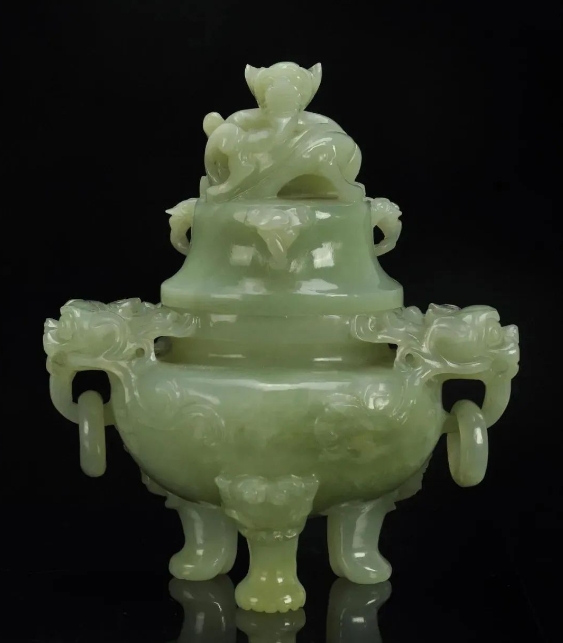
Serpentine is a general term for a hydrous magnesium-rich silicate mineral. Serpentine minerals mainly include chrysotile, lycheite and leaf serpentine. Serpentine jade is a mineral aggregate with serpentine minerals as the main component. Serpentine jade (Xiuyan jade) is widely distributed in nature and has different names for jade depending on its origin.
Such as Xinyi jade in Guangdong, Luchuan jade in Guangxi, Jiuquan jade in Gansu, Kunlun jade in Xinjiang, serpentine jade, also known as Xiuyan jade, is named after Xiuyan County, Anshan City, Liaoning Province. Xiuyan jade is one of the "Four Ancient Jades" in Chinese history.
PART 01
Liaoning Xiuyan Jade
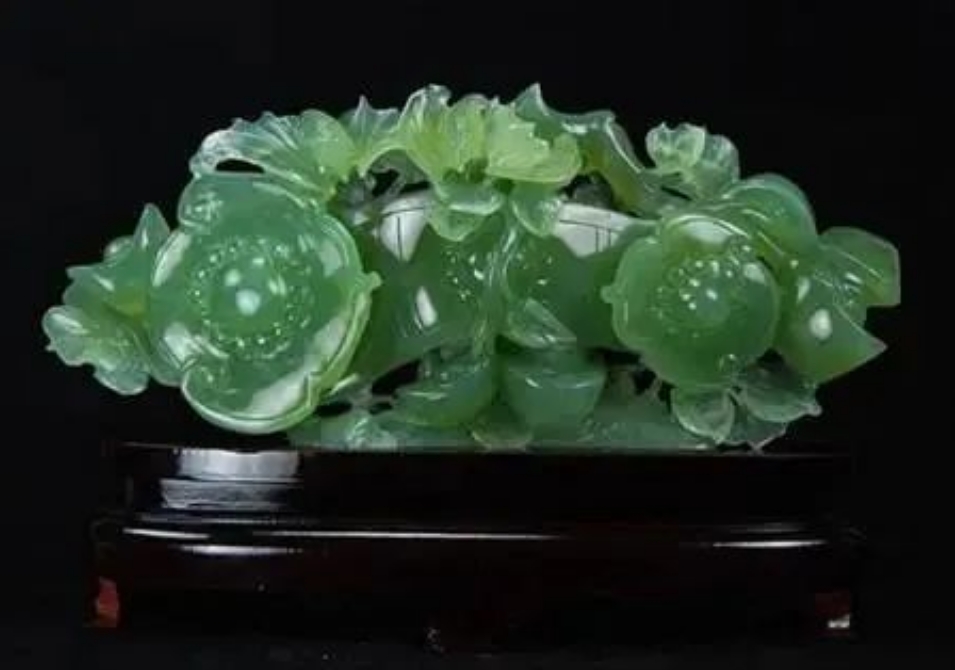
Xiuyan serpentine jade is mainly produced in the Wagou area of Hadabei Town, Xiuyan. The 10-mile-long valley here has a mineral reserve of about 1.76 million tons and 76 jade ore bodies, making it the largest jade producing area in China. Serpentine Xiuyan jade has rich colors, including light green, emerald green, black green, white, yellow, light yellow, gray, etc., but green is the main color.
PART 02
Yingkou Jade
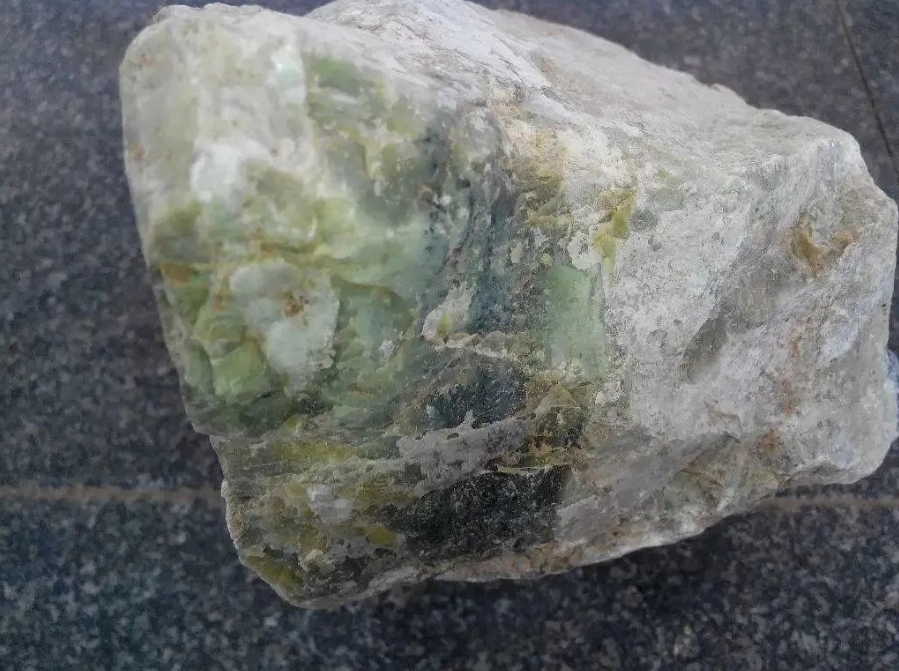
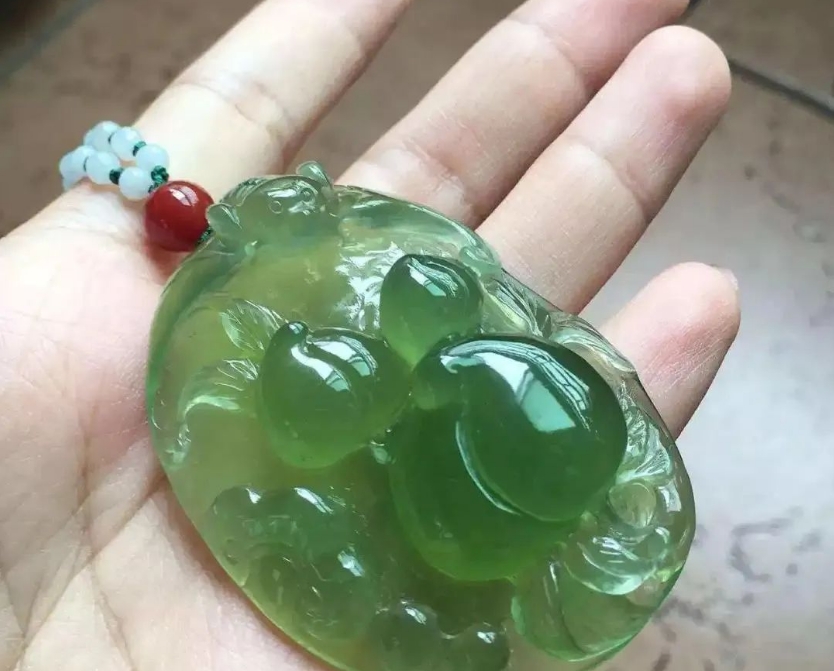
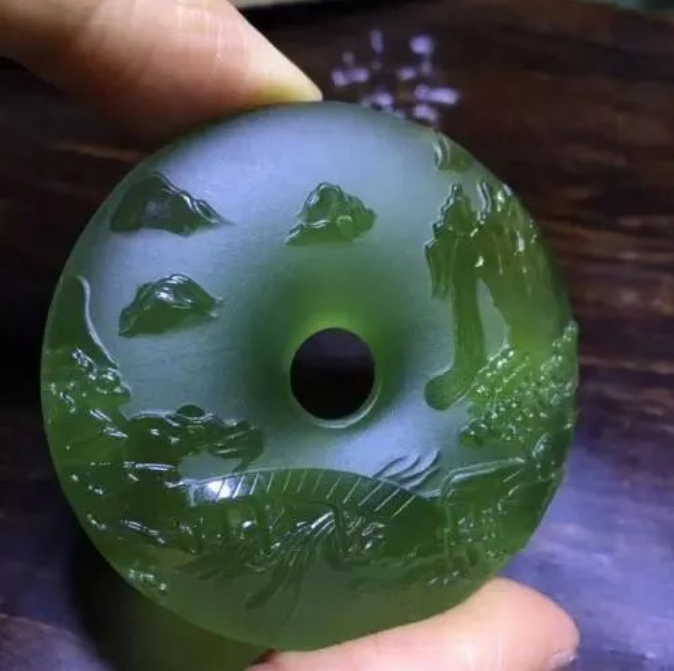
The serpentine jade produced in Dashiqiao, Yingkou City, Liaoning Province is a kind of traditional jade Xiuyan jade. In recent years, a large number of serpentine jade resources have been discovered in the Houxianyu boron mining area of Dashiqiao. Experts named it Yingkou jade and divided it into four varieties: emerald green jade, dark green jade, cloud jade, and bronze jade. Emerald green jade and dark green jade are uniform green and dark green respectively, with pure composition, less impurity mineral content, fine texture, higher Fe2+ content than Xiuyan jade, and darker color.
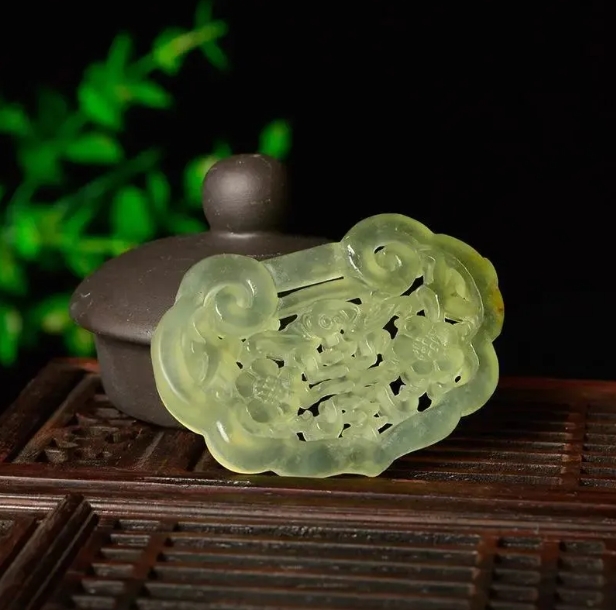
The texture of Yuncui jade is slightly rough, with mixed green and white spots, and a high content of impurity minerals such as calcite and dolomite.
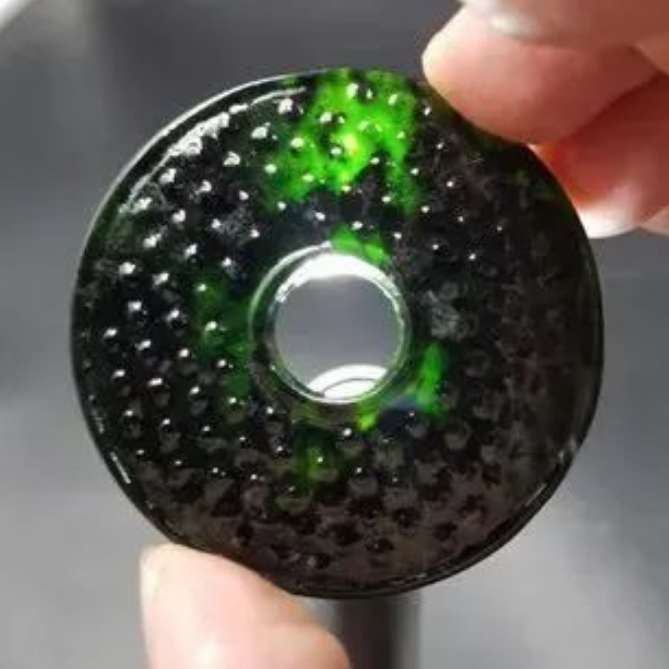
Bronze jade is gray-black in color, has a coarse texture, is opaque, and contains a lot of residual olivine, making it suitable for making bronze antique jade.
PART 03
Serpentine Jade in Other Areas of Liaoning
There are also serpentine jade mines in Fengcheng, Kuandian, Dandong and Haicheng, Liaoning. The origin of serpentine jade in Kuandian, Liaoning is similar to that of serpentine jade in Xiuyan, Liaoning. The main mineral component is leaf serpentine, with a content of more than 90%. It is mainly composed of scaly metamorphic and micro-metamorphic structures, with a blocky structure. It has rich colors, mainly yellow-green and light green, with even color distribution, few impurities, and high transparency. Its basic properties are consistent with the evaluation and description of traditional Xiuyan jade in gemology.
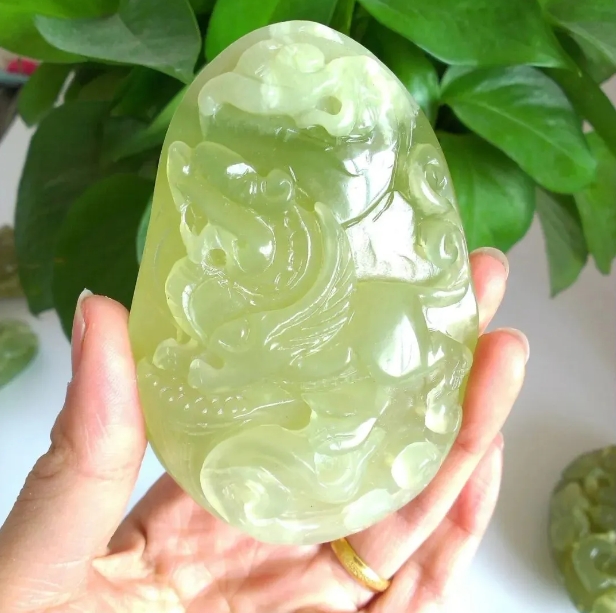
The main mineral component of Liaoning Kuandian serpentine jade is antigorite, and the secondary minerals are calcite, talc, mica, brucite, etc. The color is rich, mainly yellow-green and light green, the color is uniform and there are few impurities, and some are white, blue-green, and dark green are rare.
PART 04
Gansu Jiuquan Jade
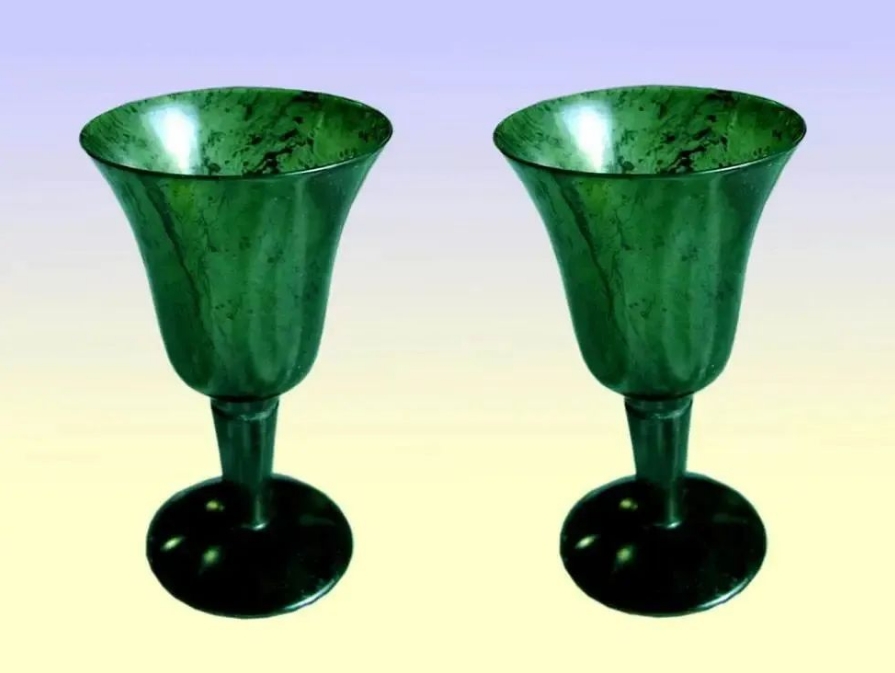
It is produced in the mountains near Jiuquan, Gansu. Because the mountain is called Qilian Mountain, it is also called Qilian Jade. The jade is dark green with many black spots. Geological identification shows that its mineral is serpentine, the same as Xiuyan Jade, but the jade color is very easy to distinguish from Xiuyan Jade.
PART 05
Wushan County Mandarin Duck Jade
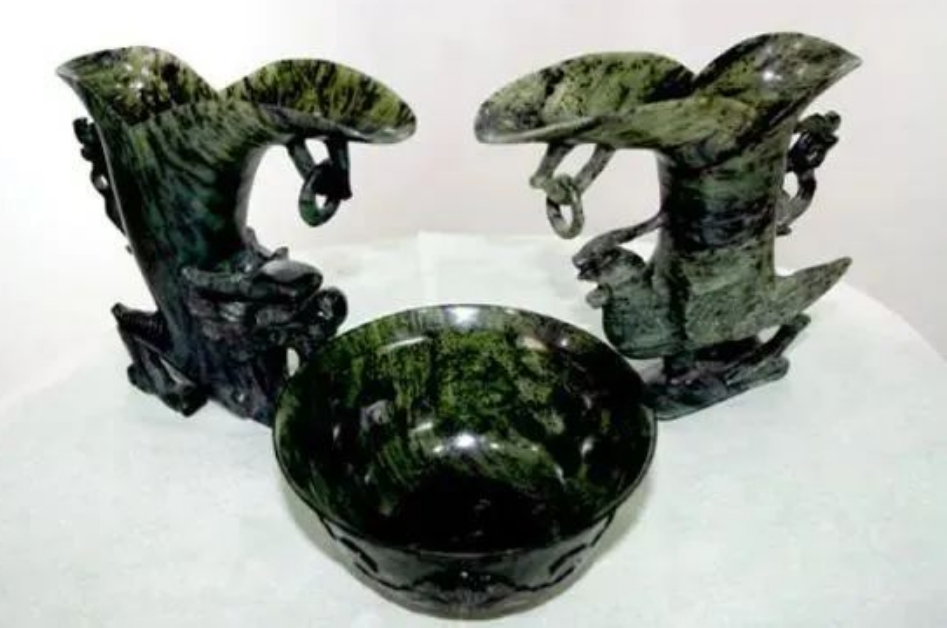
Yuanyang jade refers to ultrabasic rocks produced in Yuanyang Town, Wushan County, Gansu Province. Its mineral components are serpentine, carbonate, talc, magnetite and chrome spinel. The mineral name is serpentinite, which is a kind of young jasper. The distribution points of Yuanyang jade are mainly Qiujiaxia Mine and Miaoerwan Mine in Yuanyang Town, Wushan. Among them, Qiujiaxia Mine has rich reserves and good exposure. According to some data, the proven reserves of Wushan Yuanyang Jade in Tianshui, Gansu Province are 324 million ㎥, which is the second largest mine in the world. Wushan Yuanyang Jade began large-scale development in 1978.
PART 06
Hefei Feidong Serpentine Jade
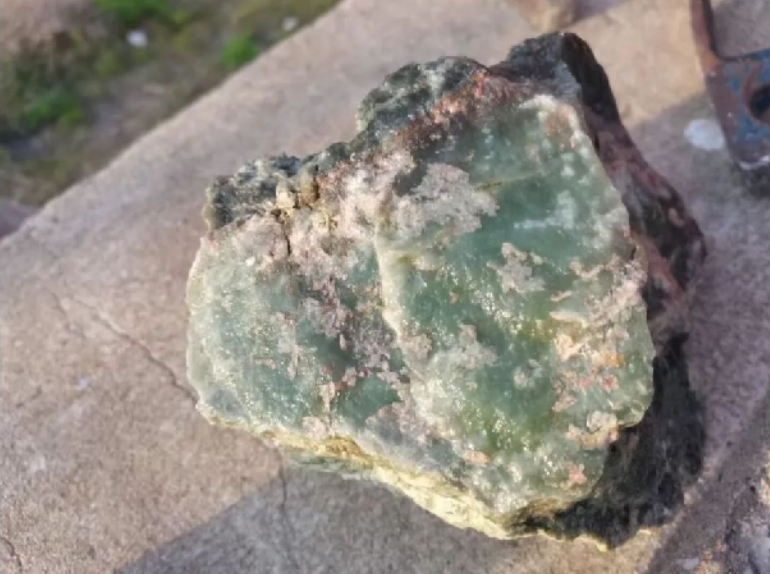
The local media in Hefei once reported that serpentine jade resources were found in a mountain in Feidong County, Hefei City. Regarding the tip-off of "green glass stone found in the mountain", the reporter found a mine containing serpentine jade in the mountain rock in a town in the southeast of Feidong. Later, experts from the Provincial Geological Survey Institute confirmed that the green "glass stone" in the mountain is indeed a kind of jade, or it can be called "Hefei jade".
PART 07
Guangxi Luchuan Jade
Luchuan Jade: Serpentine jade produced in Luchuan, Guangxi. It is a serpentine jade mainly formed by metamorphism of basic and ultrabasic rocks. However, the serpentine content is relatively low, generally only 55% to 75%, and it also contains a certain amount of chlorite, talc and tremolite, as well as a small amount of carbonate and other minerals. The crystal particles are also slightly coarse.
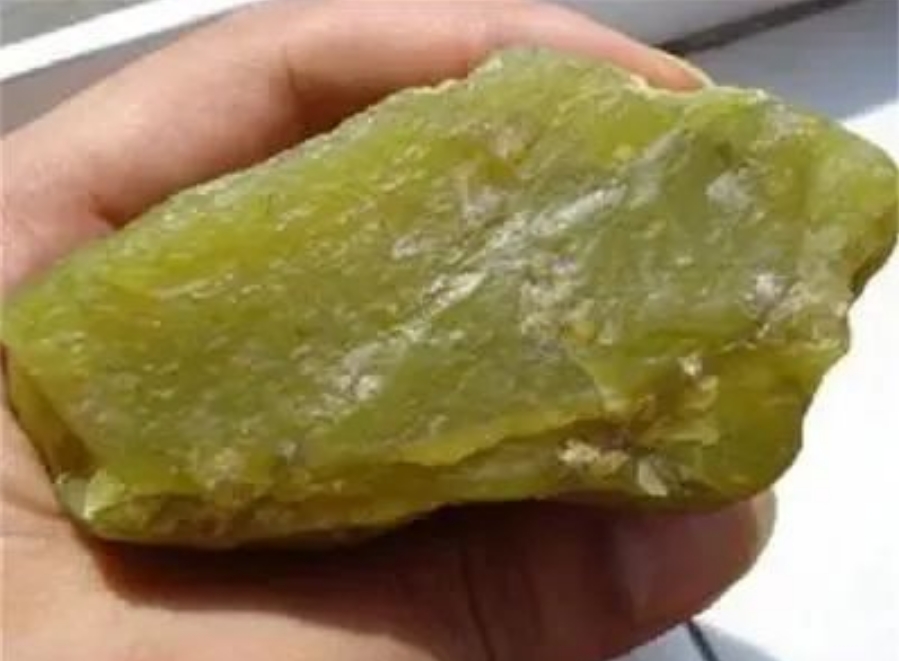
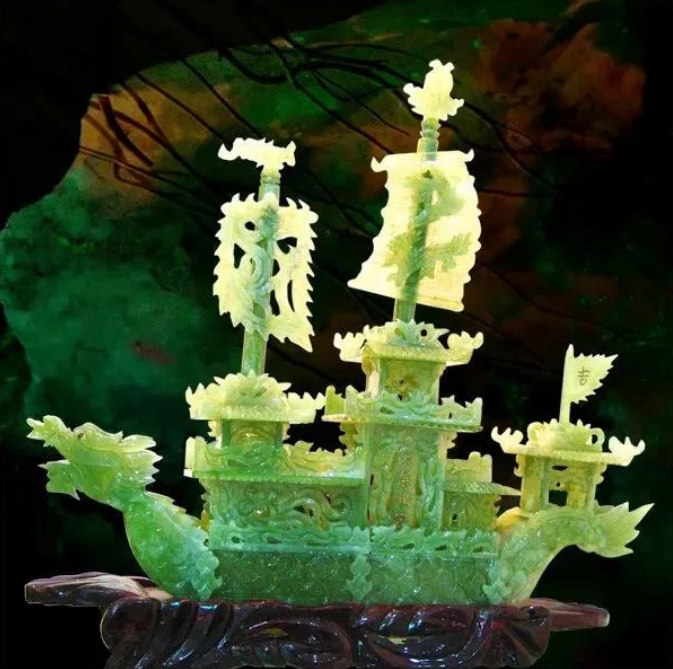
In addition, Guangdong Xinyi jade and Guangxi Luchuan jade are both serpentine jades, and their geographical locations are very close, both located in the Yunkai Mountain area at the junction of Guangdong and Guangxi provinces. Therefore, the mineralization mechanisms of the two should be very similar.
PART 08
Shandong Taishan Jade
Taishan jade is a kind of jade produced in the Taishan Mountains, and its main component is serpentine. According to the existing national standards, it can only be called serpentine jade or Xiuyan jade, and is mainly distributed in Shila Village and Jieshou Village. Taishan jade can be divided into Taishan jasper, Taishan black jade, Taishan emerald jade and Taishan purple gold jade according to color, impurities, structural characteristics, etc.
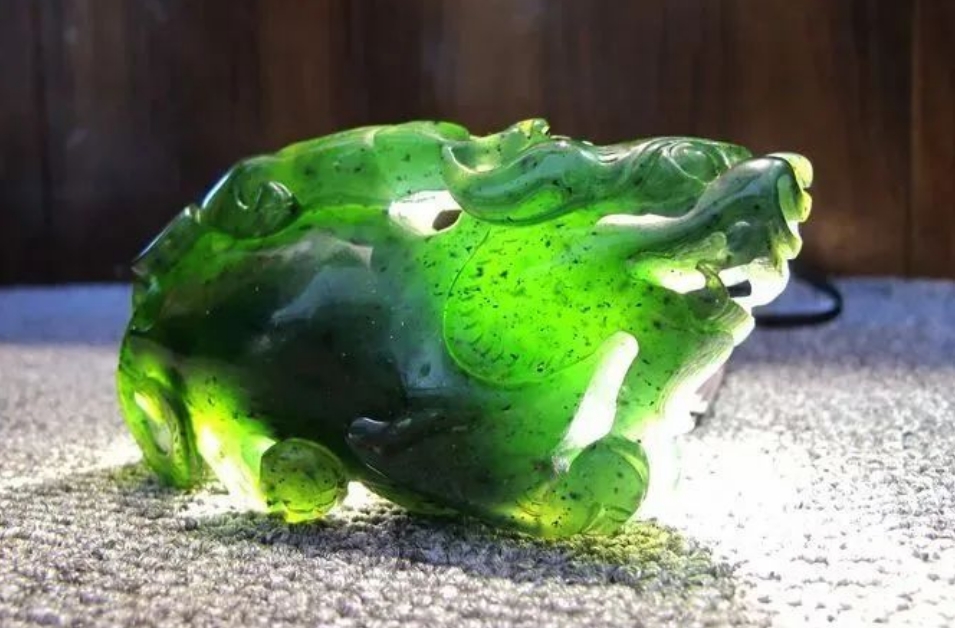
The main mineral component of Taishan jade is serpentine, accounting for more than 80% to 90%, accompanied by a small amount of chlorite, talc, asbestos, magnetite, etc., which are unevenly distributed.
PART 09
Serpentine in other areas of Shandong
A type of serpentine produced in Junan County, Shandong Province is called Junan jade. Junan jade is a black or nearly black blocky serpentine jade that is serpentinized from ultramafic rock. It has a coarse and opaque texture.
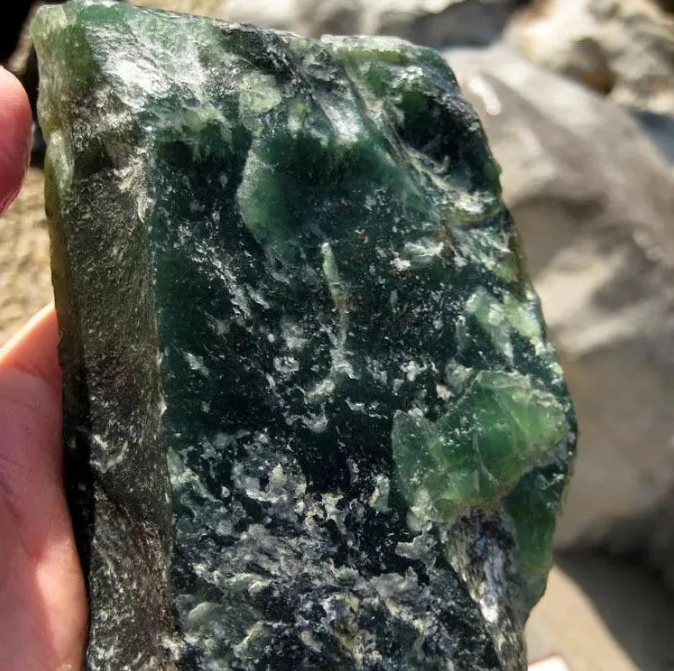
The Rizhao green stone, also known as Solo green stone or Luoshu jade, produced in Hushan Soloshu Village, Lanshan District, Rizhao, Shandong, is also a serpentine rock altered from ultrabasic rocks. Most of them are used as strange stones, and a few with excellent texture can be used as jade. The Laiyang jade produced in Jiangtuan, Laiyang, Shandong, is also known as Jiangtuan jade or Fengshan jade. It is a serpentinized marble, and the fully serpentinized ones can form serpentine jade.
PART 10
Guangdong Serpentine Jade
Xinyi Nanyu, also known as Southern Jade, is a variety of Xiuyan Jade. It has been processed into jade since the 1950s and entered its heyday in the 1970s. Xinyi Nanyu is listed as one of the four famous stones (jade, marble, Ying stone, and inkstone stone) in Guangdong.
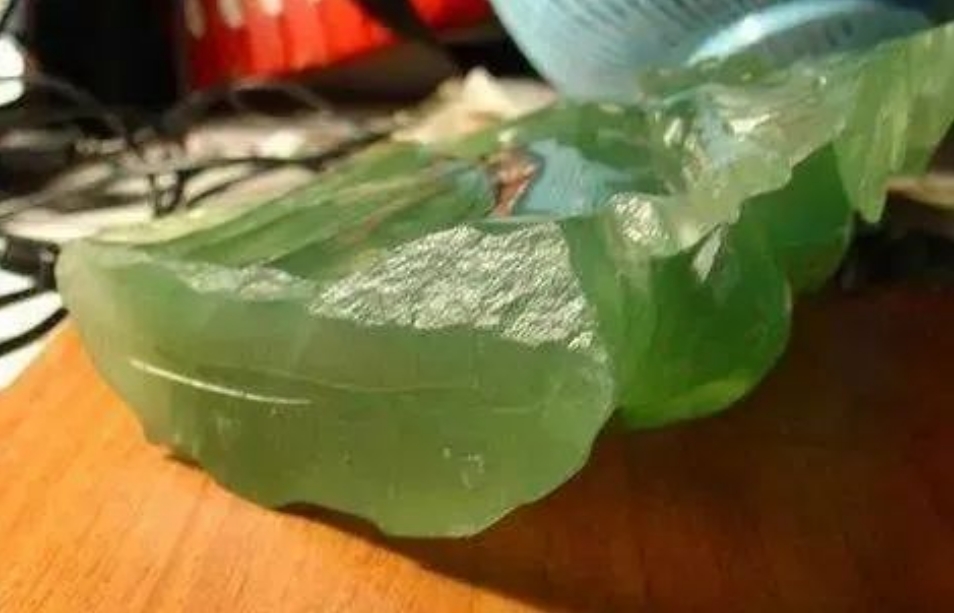
Xinyi Nanyu is a serpentine jade, emerald green, crystal clear like ice, soft and smooth, with elegant stone patterns, and a variety of colors such as yellow-green, cyan, and black. It is mainly light green, with yellow, white, brown and other colors. It has a fine texture, greasy or waxy luster, and is translucent. It belongs to the same serpentine jade as Liaoning Xiuyu, but the color is often different from Xiuyu, with a dark green to brown-green tone. At the same time, the geological conditions of production are also different from Xiuyu. Xinyi jade has been discontinued, and now Luchuan, Guangxi has become an important production area of serpentine jade materials in the south.
PART 11
Jilin An Green Jade
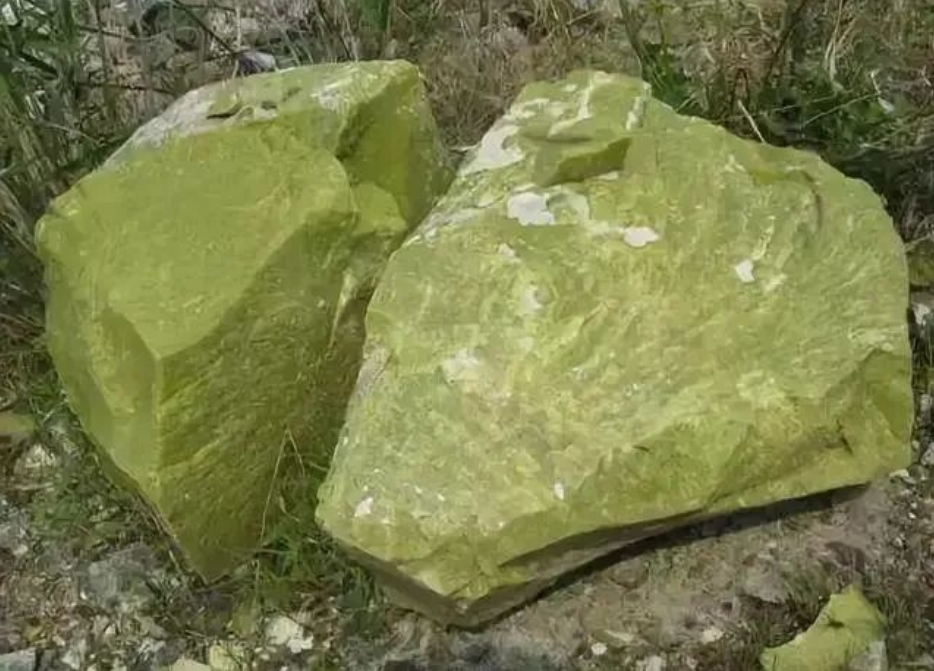
Anluite is also a serpentine jade, named after the Lushui River in Ji'an County, Jilin Province, where it was first discovered. Anluite is also called Ji'an Xiuyu, and is produced at the foot of Yunv Peak in the west of Ji'an City, Tonghua City, Jilin Province. It is a metamorphic serpentine among silicate minerals and is a type of serpentine jade.
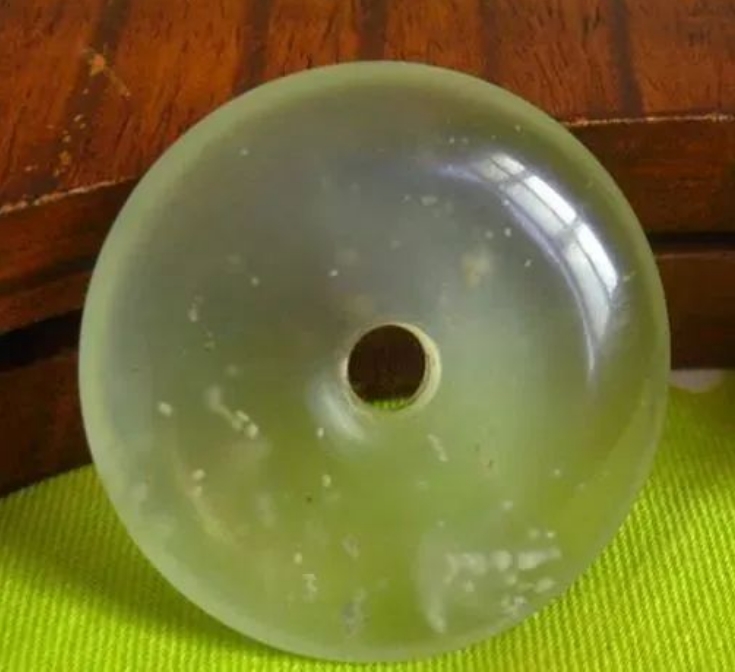
The stone has a fine texture, moist green color, and beautiful patterns. The color is generally bright apple green or dark green, slightly transparent to translucent, smooth and pure, jade-like in shape and color, and soft to the touch. It is a good stone for carving. It was named after the Green Water River under the Yunv Peak in Ji'an where it was first discovered.
PART 12
Xinjiang serpentine jade
Serpentine jade, known as "Kunlun Jade (serpentine and tremolite)", is produced in many places in Kunlun Mountains and Altun Mountains in Xinjiang. The ore bodies are located in the contact zone between dolomite marble and diorite intrusions. It has various colors, fine texture, and mostly waxy luster.
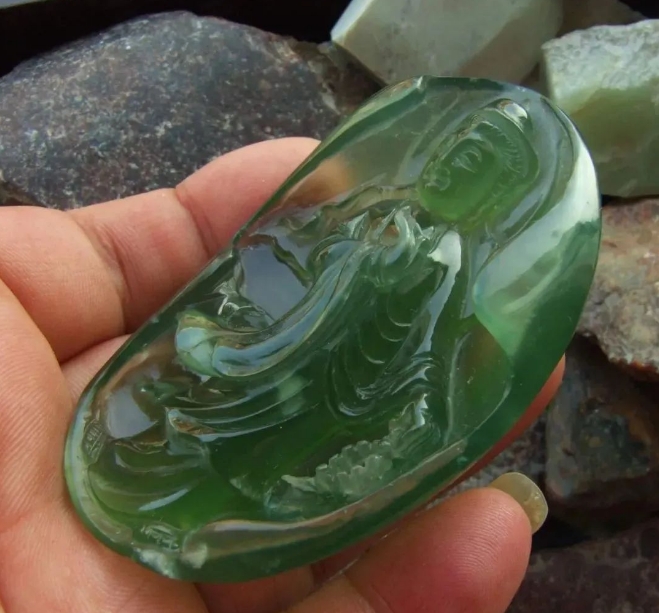
In addition, the ultrabasic rock alteration type serpentine jade produced in Tuoli County, Tacheng area in the northwest of Xinjiang is called Tuoli ophiure jade. Similar serpentine jade is also produced in Fuyun County in the north and Hongliugou in Ruoqiang County in the east. The jade is mainly dark green, dark green, yellow green and other colors, with black dots of chromite and magnetite, and has a fine texture.
PART 13
Huili Serpentine Jade
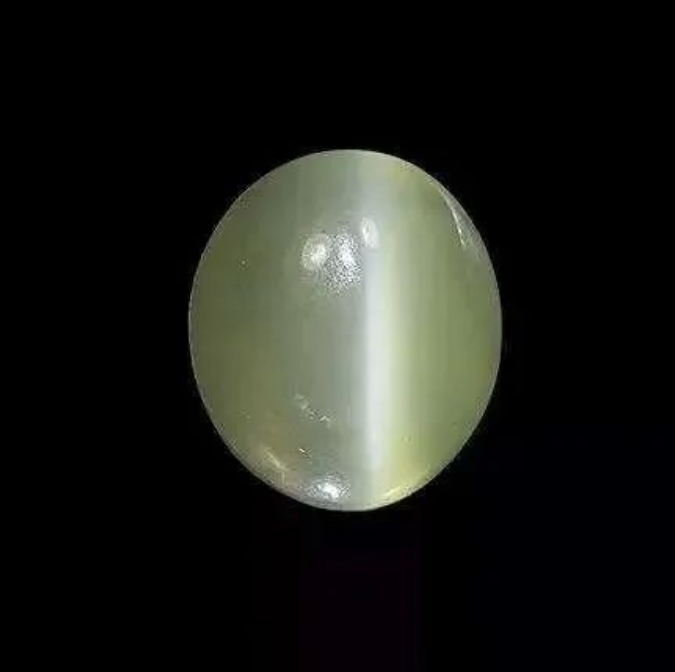
The serpentine jade produced in Huili County, Liangshan Prefecture, Sichuan Province is called "Huili Jade" and is of ultrabasic hydrothermal alteration origin. The jade is mostly dark green, looks like jasper, and has a relatively fine texture. In recent years, serpentine jade with cat's eye effect has been newly discovered in the same place of origin as nephrite cat's eye in Shimian County. The serpentine cat's eye is composed of densely arranged parallel fibrous serpentine, with various colors and waxy or silky luster. It is of ultrabasic hydrothermal alteration origin.
PART 14
Yunnan Serpentine Jade
Serpentine jade is produced in many places in Yunnan, including Dongchuan, Wuding, Jingdong, Cangshan, Mojiang, etc. The serpentine jade in these places is collectively called "Yunnan Jade". The ore bodies include both magnesium-rich carbonate rock metamorphic type, such as Wuding and Dongchuan serpentine jade; and ultrabasic rock hydrothermal alteration type, such as Jingdong and Mojiang. The jade has various colors and fine jade. It often contains secondary mineral chlorite
PART 15
Serpentine Jade from Other Regions
Lantian jade from Lantian, Shaanxi (some Lantian jade with a high proportion of serpentine is also serpentine jade), serpentine marble from Jiaocheng County, Shanxi, serpentine marble from Tieli, Heilongjiang, serpentine from Taowan, Luanchuan, Henan, serpentine marble from Damiao Village, Chengde, Hebei, serpentine from Tianchang, Anhui, serpentine jade from Xiaosigou, Hebei, etc.