Richemont Group's new CEO decodes future consumption trends and growth opportunities in the jewelry industry
In June this year, Swiss luxury giant Richemont announced that Nicolas Bos, the current CEO of its French high-end jewelry brand Van Cleef & Arpels, was officially promoted to the position of CEO of Richemont. Nicolas Bos has worked at Richemont for 32 years since 1992, and has worked for Van Cleef & Arpels for the past 24 years. He was promoted to CEO of the brand in 2013, and his achievements during this period have been highly praised by the group.
The jewelry department, which includes three jewelry brands Cartier, Van Cleef & Arpels and Buccellati, has always been the core business of Richemont Group. According to the group's latest financial data for the first half of fiscal year 2025 ending September 30, 2024, in the current difficult environment, the jewelry department's sales still achieved a year-on-year growth of 2% (4% at a fixed exchange rate), and its contribution to the group's sales rose to 70%.
Nicolas Bos attended the analyst meeting after the release of the financial report for the first time as the group's CEO, sharing his latest assessment of the jewelry industry's prospects and the changes in consumer behavior he has observed.
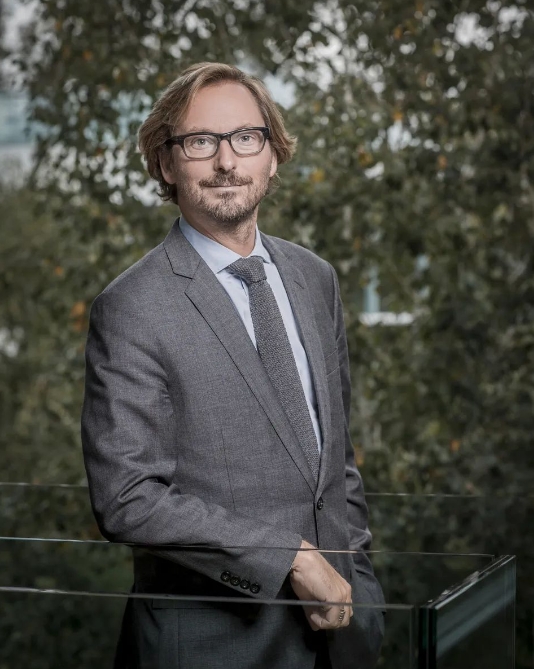
Note: Richemont Group abolished the position of group chief executive officer (CEO) in 2016 and appointed Jérôme Lambert, then the group’s chief operating officer (COO), as CEO in 2018. However, according to the Financial Times, his actual responsibilities are more limited than those of Nicolas Bos today, because the CEOs of the group’s two top brands, Cartier and Van Cleef & Arpels, and the head of the group’s finance department do not report to him.
01
More and more men are wearing jewelry
It’s interesting that sometimes there are positives to the way the world is doing, like we see more and more men wearing jewellery that wasn’t originally designed for men. This is especially true at Van Cleef & Arpels. We’ve never had celebrity endorsements and we’ve stayed away from the world of sports and masculinity. But during the Olympics we saw a lot of male athletes wearing the Alhambra bracelet (below). I think they see it as a symbol of good luck.
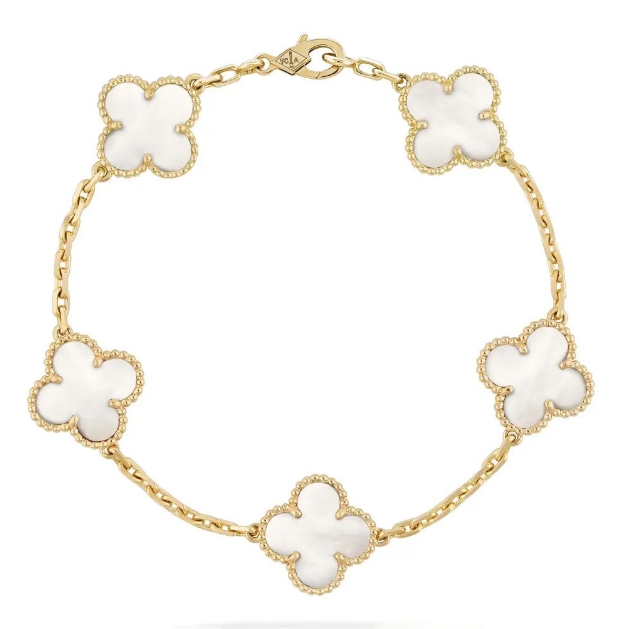
Maybe 15 or 20 years ago, a lot of men wouldn't wear this type of jewelry, but now they feel very comfortable with it. I don't know if this will become a major trend or a new market segment, but it's certainly an interesting phenomenon. This is the only emerging trend I've seen in the past six months or a year.
Everything else is pretty stable, and we don't see any particular trends in product lines or customers. All collections and regions are performing quite well. High-end and top-quality jewelry, custom jewelry, special orders are all showing strong resilience. Cartier launched its latest high-end jewelry collection in Vienna before the summer, which was a huge success. So we see very good momentum in the high-end market. At the same time, all classic collections are also performing well, such as Cartier's relaunched Love and Trinity collections, Van Cleef & Arpels' Alhambra, Buccellati's Macri, etc. It can be said that it is blooming across the board.
02
What are the advantages of Richemont Group in the jewelry industry?
When it comes to jewelry, I think we've been through many, many cycles in the past - I have some bias towards jewelry, of course. But I think part of the beauty of it is that it's both delightful and quite fashionable at the same time, and it always has investment value. We've seen in more difficult or more complex cycles that this security associated with the investment value of jewelry is actually a very positive factor.
So, in a way, I think what our brand does quite well in that regard is to maintain the appeal and fashion element of jewellery, while combining its investment value and heritage significance. If you think about it, the Alhambra collection was launched in 1968 and has been quite fashionable ever since. The Love bracelet was created in 1969, so it has been popular for more than 50 years. I think that gives a lot of customers a sense of security. It also makes us quite optimistic about the further potential of jewellery in today's economy.
And, as we briefly discussed before, this potential also crosses different geographies and price segments. So, our jewelry brands are very focused on developing extraordinary and unique high-end jewelry pieces, but at the same time, they also maintain jewelry products that are accessible to a very wide customer base, even if not everyone can afford them, and that are relevant to all cultures and geographies. I think this is the advantage of Cartier, Van Cleef & Arpels and Buccellati in this area.
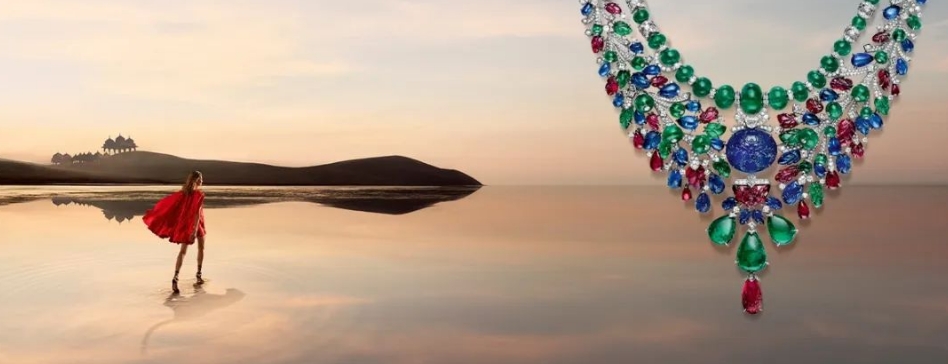
Finally, one of the advantages of the jewelry category is that the price range is very wide. From Alhambra pendants and Love bracelets to the most expensive high-end jewelry, the price range is very wide, which sometimes provides more market opportunities than other categories.
03
The importance of “brand” in the jewelry category continues to grow
I remember 20, 25 years ago, we would generally assess that branded jewelry was maybe 5% of the market. I think today, we would probably assess it to be around 25%, maybe more, and it's still evolving. It's hard to know exactly to what extent and how fast, but we are definitely seeing the importance of "brand" in the jewelry category continue to grow.
Interestingly, although numerically this is an exception, even in a country like India which has traditionally been very focused on non-branded jewellery, which we call unbranded jewellery, we are now seeing a growing traction in branded jewellery. Enhance. While the numbers aren't yet significant, it's another sign of a growing phenomenon in branded jewelry that's far from over.
To meet current and future demand, our Jewellery Maisons continue to invest in their production capacities: Cartier opens a new manufacturing facility in Valenza, Italy, Van Cleef & Arpels acquires new ateliers in various locations in France, and Buccellati begins operations at its recently acquired Italian site.
04
The entry of “non-traditional players” into the jewelry field is a positive factor
The competitive landscape in jewelry is constantly changing and evolving. Slowly but definitely changing. If we look back over the last few decades, we can see the emergence of some new players, we could call them new pure players, like Messika, which has done very well as a jewelry brand. Of course, there are also more options from fashion brands, like Chanel, Dior and Hermès, which have reinvented the jewelry offering, sometimes including high jewelry.
So it's an evolving space. Obviously, a big change is the "non-traditional players" like these fashion and luxury brands entering the market and becoming quite significant. Ultimately, that's led to more competition, but it's also led to more creativity. That means jewelry is attracting more customers who might not have considered buying jewelry before. So we see that as a positive. It's a very dynamic category that continues to grow. I believe that today, especially in this period that we're in, brands are really focusing on what makes them special and what makes them different, and avoiding confusion and overlap.
This is also the reason for the various successes we have seen within the Group and elsewhere, when brands focus on their specific identity and DNA, they succeed.
But from Richemont's perspective, we still like those traditional, long-established jewelers that set the tone for the jewelry space. So we are very happy to welcome (Richemont's newly acquired Italian jewelry brand) Vhernier, which was founded in the 1980s and is one of the brands that has been able to develop a very unique new style in jewelry while still being a pure player in the jewelry space. This is exactly the type of brand we are happy to include in our portfolio, which really complements the brands we already have. (Source: Luxe.co)