

A rare mineral - Molybdenum lead ore
With the rapid development of the domestic market for collecting mineral specimens, many gem minerals have begun to enter the domestic market.
Today, I would like to introduce to you a relatively rare mineral variety - molybdenum lead ore.
What is molybdenum lead ore?
Molybdenum lead ore is a relatively important source for extracting molybdenum and is also a common molybdenum mineral.
It is a lead molybdate mineral that occurs in the oxidation zone of lead and molybdenum.
The chemical formula is PbMoO4, and the most common is a thin plate-like crystal with colors such as red, orange, yellow, or brown.
It is transparent to semi transparent and is sometimes referred to as "yellow lead ore" or "colored molybdenum lead ore".
It is a lead molybdate mineral that occurs in the oxidation zone of lead and molybdenum.
The chemical formula is PbMoO4, and the most common is a thin plate-like crystal with colors such as red, orange, yellow, or brown.
It is transparent to semi transparent and is sometimes referred to as "yellow lead ore" or "colored molybdenum lead ore".
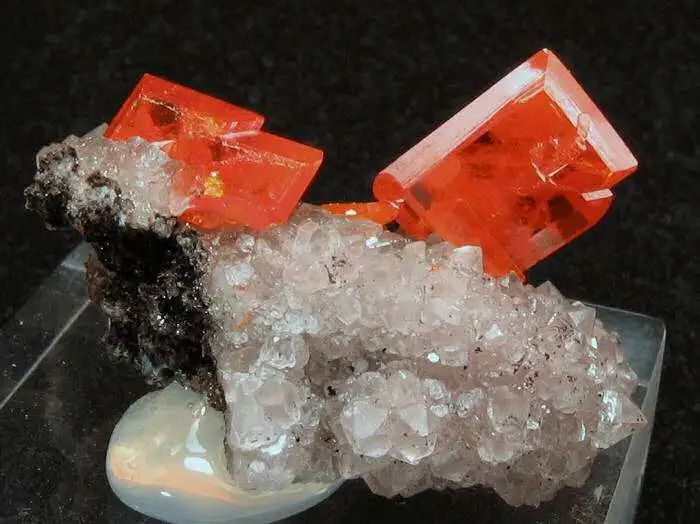
Naming of Molybdenum Lead Mine
This mineral was first discovered by Austrian mineralogist F.X. Wulfen in Bart Blayberg, Kerdon, Austria, and was later named wulfenite after him, which translates to molybdenite in Chinese.
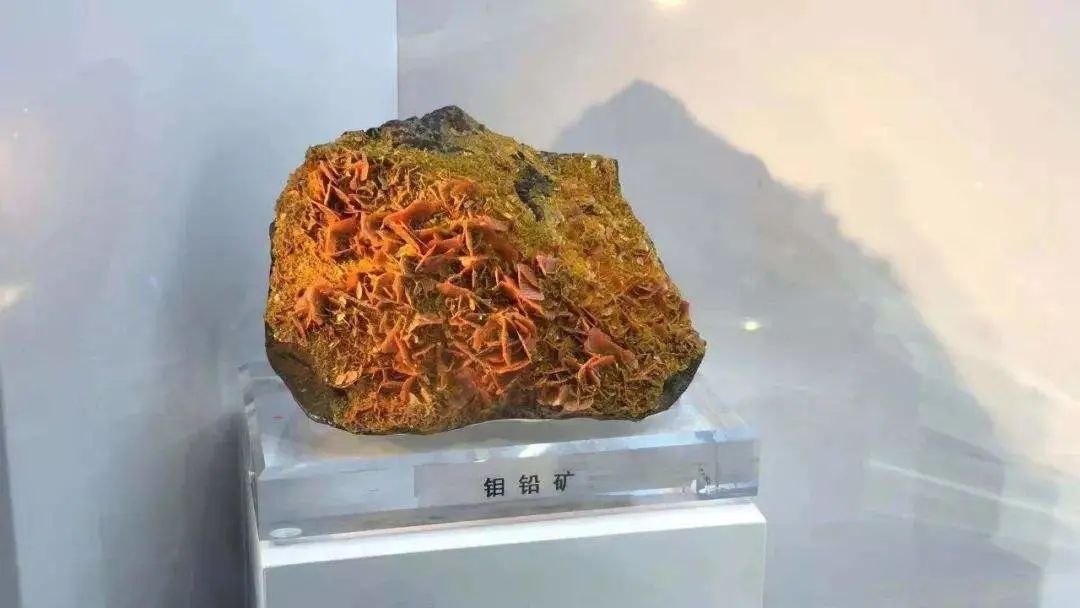
Gemological Information
Molybdenum lead ore is really fragile, its Mohs hardness is only 2.5-3. This also means that it is only slightly harder than fingernails, which is very difficult to process and can be damaged if not paid attention to.
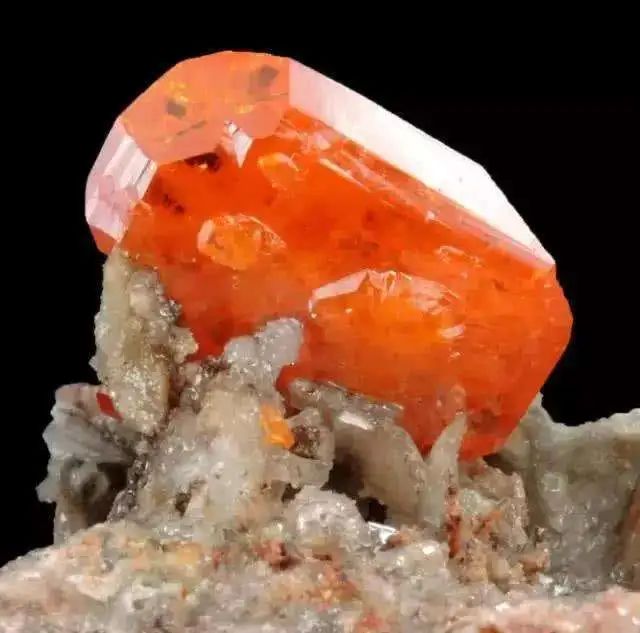
So, molybdenum lead ore did not appear in large quantities in the jewelry market, but was only collected by some museums or private collectors.
The famous American Gemological Academy treasures a molybdenum lead ore cut in the style of a gemstone, weighing 21.5 carats, produced in Chumeibu, Namibia.
This molybdenum lead ore is dazzling and shining, but it can only be viewed from a distance and not played with, which inevitably makes people feel a bit regretful.
The famous American Gemological Academy treasures a molybdenum lead ore cut in the style of a gemstone, weighing 21.5 carats, produced in Chumeibu, Namibia.
This molybdenum lead ore is dazzling and shining, but it can only be viewed from a distance and not played with, which inevitably makes people feel a bit regretful.
Metal of War
Molybdenum lead ore not only contains lead, but also another very important metal element - molybdenum.
The molybdenum content on Earth is relatively low and dispersed, belonging to the rare metal element. In addition, molybdenum does not exist in the form of elemental elements, but mainly combines with sulfur to form compounds, forming molybdenite (chemical formula MoS2); Or combined with lead to form molybdenum lead ore.
The molybdenum content on Earth is relatively low and dispersed, belonging to the rare metal element. In addition, molybdenum does not exist in the form of elemental elements, but mainly combines with sulfur to form compounds, forming molybdenite (chemical formula MoS2); Or combined with lead to form molybdenum lead ore.
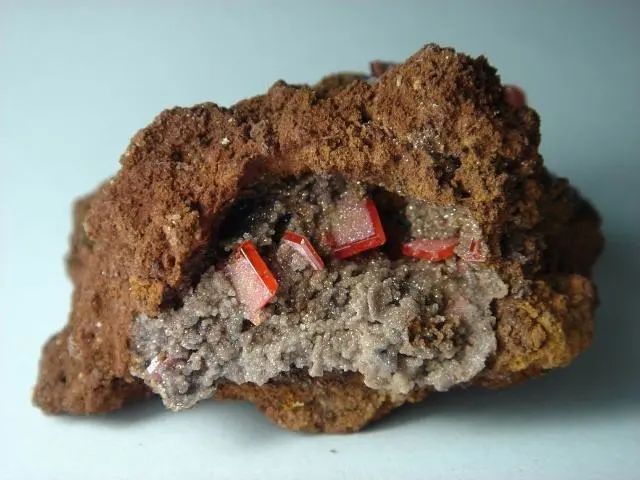
Molybdenum is a silver white metal with a hard texture and a melting point of up to 2623 ℃, ranking sixth only after natural elements carbon, tungsten, rhenium, osmium, and tantalum. Adding molybdenum to steel to make alloys can not only improve its corrosion resistance, but also give it good thermal conductivity and a smaller coefficient of expansion;
Moreover, this alloy still has high strength under high temperature conditions. Therefore, molybdenum is mainly used in the manufacturing of alloys and has a wide range of applications in various fields such as aviation, aerospace, machinery, and automobiles, especially in the military field, which is of great significance and is known as the "war metal"
Moreover, this alloy still has high strength under high temperature conditions. Therefore, molybdenum is mainly used in the manufacturing of alloys and has a wide range of applications in various fields such as aviation, aerospace, machinery, and automobiles, especially in the military field, which is of great significance and is known as the "war metal"
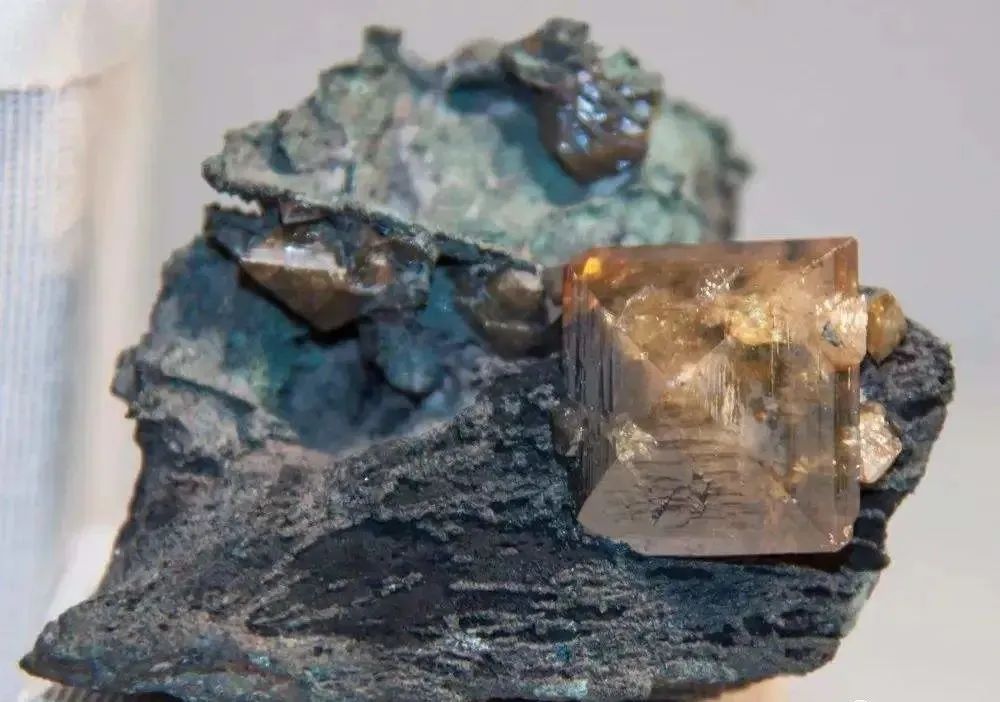
Properties of Molybdenum Lead Ore Materials
Crystal system: tetragonal crystal system, tetragonal biconical crystal class.
Crystal habits: plate-like and thin plate-like crystals, with a few cone-shaped and columnar crystals, and common single crystals. Aggregated granular.
Colors: There are various yellow, orange red, gray, brown, etc
Gloss: Diamond luster, fracture oil luster.
Transparency: Transparent to semi transparent.
Cleavage: cleavage complete, moderate, incomplete
Mohs hardness 2.5-3
Specific gravity 6.5-7,
Refractive index: uniaxial crystal Ne=2.304, No=2.402
Double reflectance=0.0980.
Photoactivity: Negative photoactivity of uniaxial crystals.
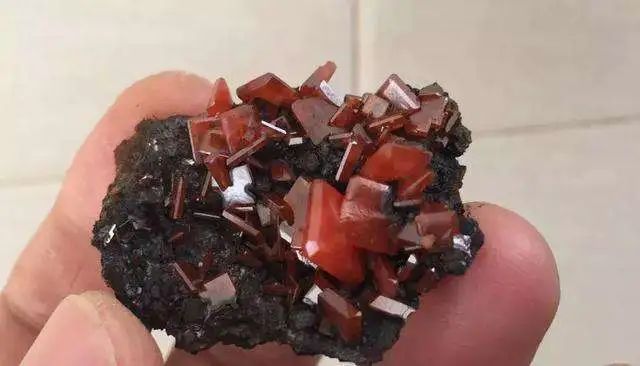
Molybdenum lead ore and scheelite
Geologists have found that lead (Pb) in molybdenite can be partially replaced by calcium (Ca), and molybdenum (Mo) can be partially replaced by tungsten (W).
Therefore, the crystal structure of molybdenite and scheelite (CawO4) is very similar, but their crystals are usually thinner and flatter than scheelite.
People who like to collect scheelite know that scheelite has a strong "fire color", and molybdenum lead ore is superior in this regard.
Transparent molybdenum lead ore has a high refractive index (2.283~2.405) and chromaticity (0.203) for light. If properly cut, molybdenite can exhibit a "firing" phenomenon similar to diamonds.
Therefore, the crystal structure of molybdenite and scheelite (CawO4) is very similar, but their crystals are usually thinner and flatter than scheelite.
People who like to collect scheelite know that scheelite has a strong "fire color", and molybdenum lead ore is superior in this regard.
Transparent molybdenum lead ore has a high refractive index (2.283~2.405) and chromaticity (0.203) for light. If properly cut, molybdenite can exhibit a "firing" phenomenon similar to diamonds.
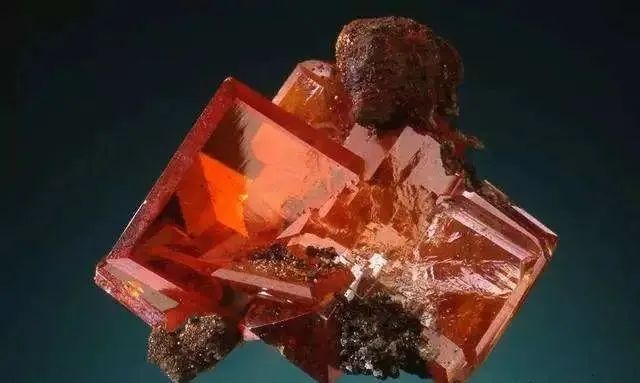
Combination with stamps
Many postal departments in countries have a great fondness for molybdenum lead ore. There is data indicating that at least 30 countries around the world have issued stamps with molybdenum lead ore as the theme. For example, the Republic of Djibouti in northeastern Africa issued a stamp with molybdenum lead ore crystals in 2015, with a face value of 300 Djibouti francs, which was collected by many people.
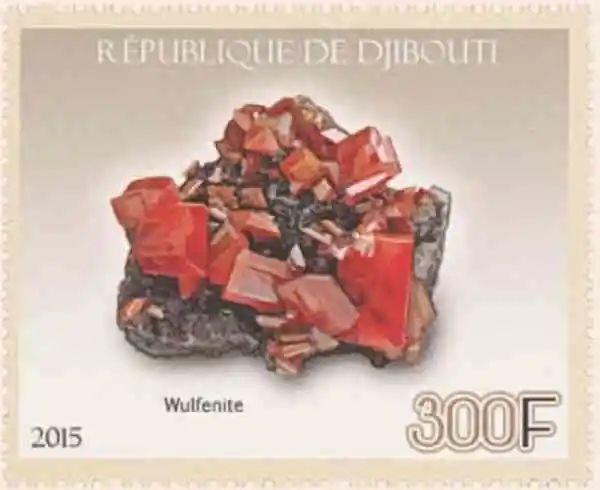
Molybdenum and lead ore stamps issued by the Republic of Djibouti in 2015
The origin of molybdenum lead ore
Molybdenum and lead mines from different regions have their own unique characteristics.
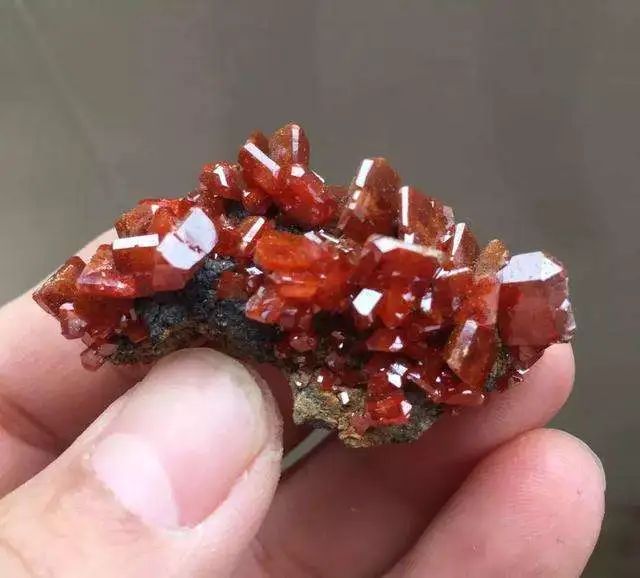
Molybdenum and lead ore from Red Cloud Mine in Arizona, USA are known for their deep red color, while those from Mexico are mainly orange.
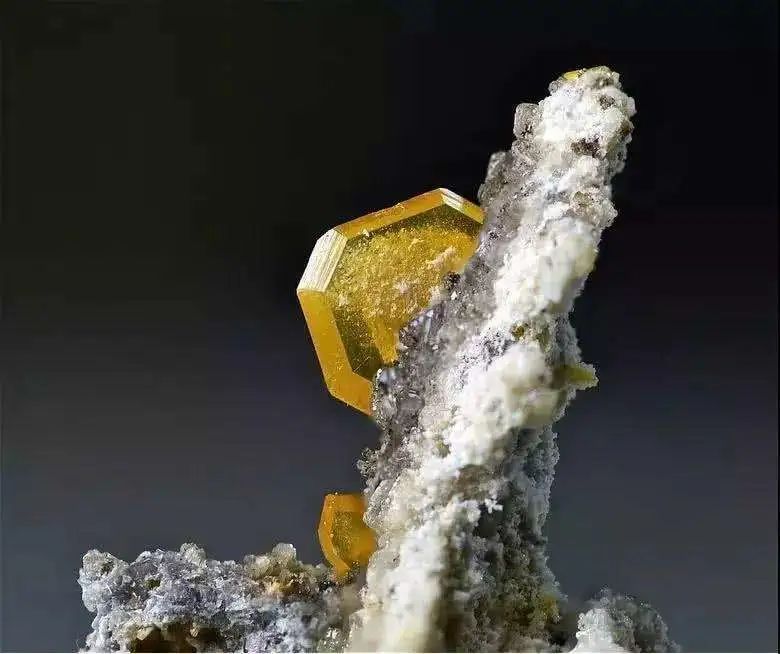
Molybdenum and lead ore from Slovenia are yellow...
Because of their bright colors and beautiful forms, they often become objects of artistic creation. This type of deposit has been discovered in Hunan, Yunnan, Colorado in the United States, as well as Mexico and Chile in China, but all belong to small and medium-sized molybdenum deposits with varying scales
Molybdenum and lead ore from Red Cloud Mine in Arizona, USA are known for their deep red color, while those from Mexico are mainly orange.
Molybdenum and lead ore from Slovenia are yellow...
Because of their bright colors and beautiful forms, they often become objects of artistic creation. This type of deposit has been discovered in Hunan, Yunnan, Colorado in the United States, as well as Mexico and Chile in China, but all belong to small and medium-sized molybdenum deposits with varying scales
Geological genesis and occurrence of molybdenum lead ore
Molybdenum lead ore is often coexisting with minerals such as quartz, calcite, vanadium lead ore, chromium lead ore, white lead ore, phosphorus chloride lead ore, etc.
It mainly occurs in the oxidation zone of lead zinc deposits and is a secondary mineral.
Therefore, the places where molybdenum lead ore is formed are often famous for large lead zinc deposits, especially in dry deserts.
In addition to Arizona in the United States, molybdenum lead ore is also produced in desert areas of countries such as Mexico, Namibia, Iran, Australia, and Morocco.
It mainly occurs in the oxidation zone of lead zinc deposits and is a secondary mineral.
Therefore, the places where molybdenum lead ore is formed are often famous for large lead zinc deposits, especially in dry deserts.
In addition to Arizona in the United States, molybdenum lead ore is also produced in desert areas of countries such as Mexico, Namibia, Iran, Australia, and Morocco.
reference material
Encyclopedia Knowledge 2019 Issue 17- Everyone Loves Molybdenum and Lead Mines