

Jewelry designers’ judgments on the value of materials are reflected in their works. - Li Anqi
How do we treat the materials at hand? How do we evaluate their value? These value judgments on materials are reflected in our works. However, understanding "objects" is far from enough to help us achieve the goal of "jewelry design", because jewelry design is not only the design of objects, but also the design of emotions, actions and discourses triggered by objects.
Designers need to place jewelry in a larger commercial, ecological and cultural context to consider the position of their works, so that they can break through the increasingly automated jewelry manufacturing system.
——Li Anqi
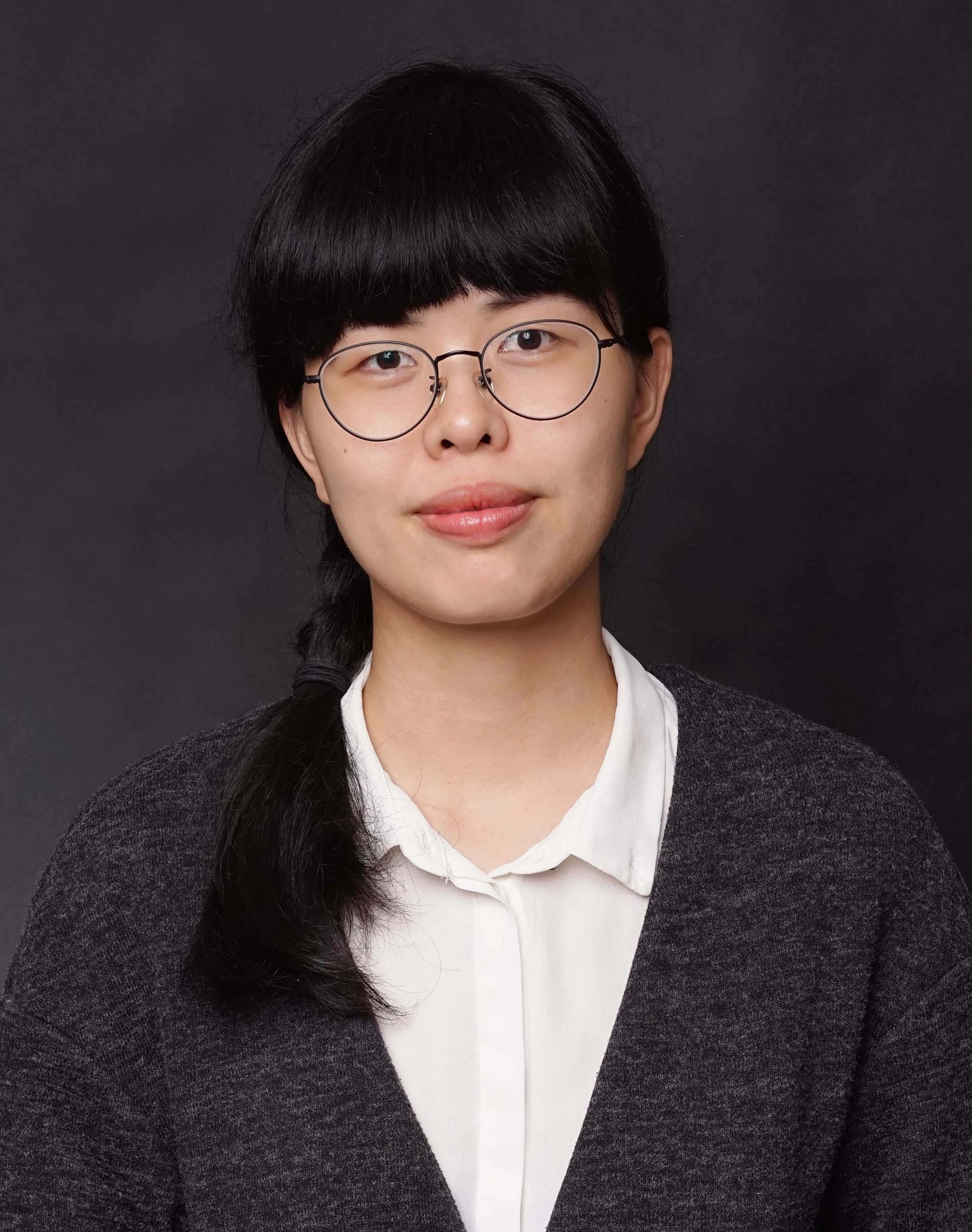
Li Anqi
Li Anqi currently teaches at Nanjing University of the Arts, engaged in jewelry art research and practice; selected as Jiangsu Province Cultural Youth and "Haisu Talent" Youth Core Training Program, and won the Central Academy of Fine Arts Doctoral Scholarship, Rhode Island School of Design Scholarship, Royal Marshall Scholarship, Tiffany Scholarship, etc.;
participated in the "Filigree Group" and "Gold Foil Group" projects of the Chinese Intangible Cultural Heritage NGO Craft Creation as a resident designer, and developed related products for jewelry brands such as Nanjing Gold Foil, Chao Hongji Jewelry, and YIN Yin;
presided over the National Art Fund Youth Project "Design Practice and Its Value in the Jade Jewelry Industry", and his works were selected for the 14th National Art Exhibition, the China Modern Handicraft Invitational Exhibition, and the Rongbaozhai First Youth Art Nomination Exhibition, and won the American Muse Design Award Silver Award;
presided over a number of provincial and school-level projects, conducted field investigations with the help of ethnographic field investigation methods, and analyzed the development context and current situation of the jewelry industry.
participated in the "Filigree Group" and "Gold Foil Group" projects of the Chinese Intangible Cultural Heritage NGO Craft Creation as a resident designer, and developed related products for jewelry brands such as Nanjing Gold Foil, Chao Hongji Jewelry, and YIN Yin;
presided over the National Art Fund Youth Project "Design Practice and Its Value in the Jade Jewelry Industry", and his works were selected for the 14th National Art Exhibition, the China Modern Handicraft Invitational Exhibition, and the Rongbaozhai First Youth Art Nomination Exhibition, and won the American Muse Design Award Silver Award;
presided over a number of provincial and school-level projects, conducted field investigations with the help of ethnographic field investigation methods, and analyzed the development context and current situation of the jewelry industry.
His works are permanently collected by the Victoria and Albert Museum (V&A Museum) and included in publications such as;
they have been selected for many domestic and international exhibitions, including the UK COLLECT International Contemporary Crafts and Design Fair, Germany's Munich Schmuck Jewelry Week, Florence Art and Design Biennale, Beijing International Jewelry Biennale, TripleParade International Contemporary Jewelry Exhibition, Triple Stage - Chinese Handicraft Nomination Exhibition, London Chinese Youth Creative Design Exhibition and Auction, New York Jewelry Week, etc.
they have been selected for many domestic and international exhibitions, including the UK COLLECT International Contemporary Crafts and Design Fair, Germany's Munich Schmuck Jewelry Week, Florence Art and Design Biennale, Beijing International Jewelry Biennale, TripleParade International Contemporary Jewelry Exhibition, Triple Stage - Chinese Handicraft Nomination Exhibition, London Chinese Youth Creative Design Exhibition and Auction, New York Jewelry Week, etc.
Some classic works
《evergreen》
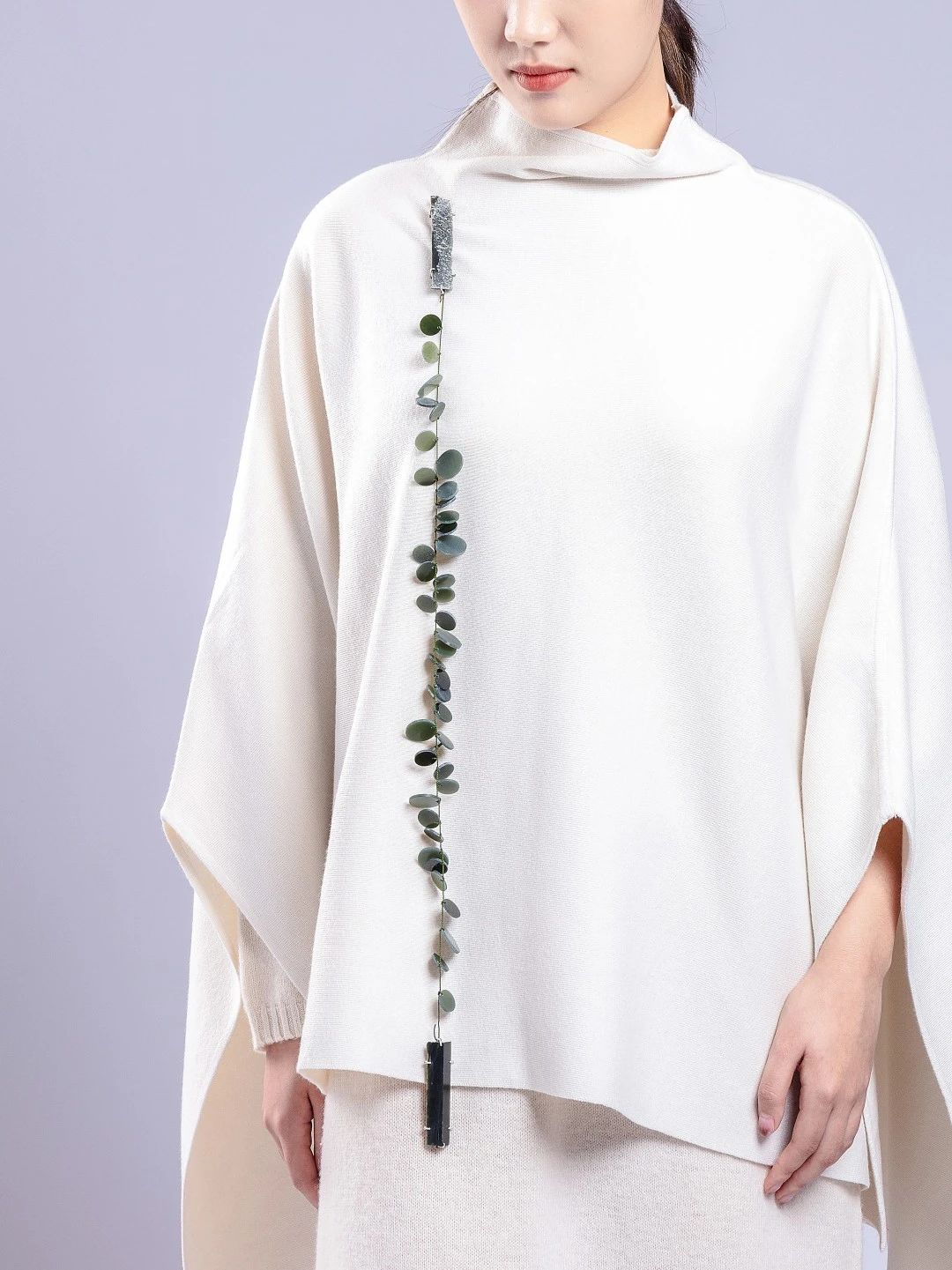
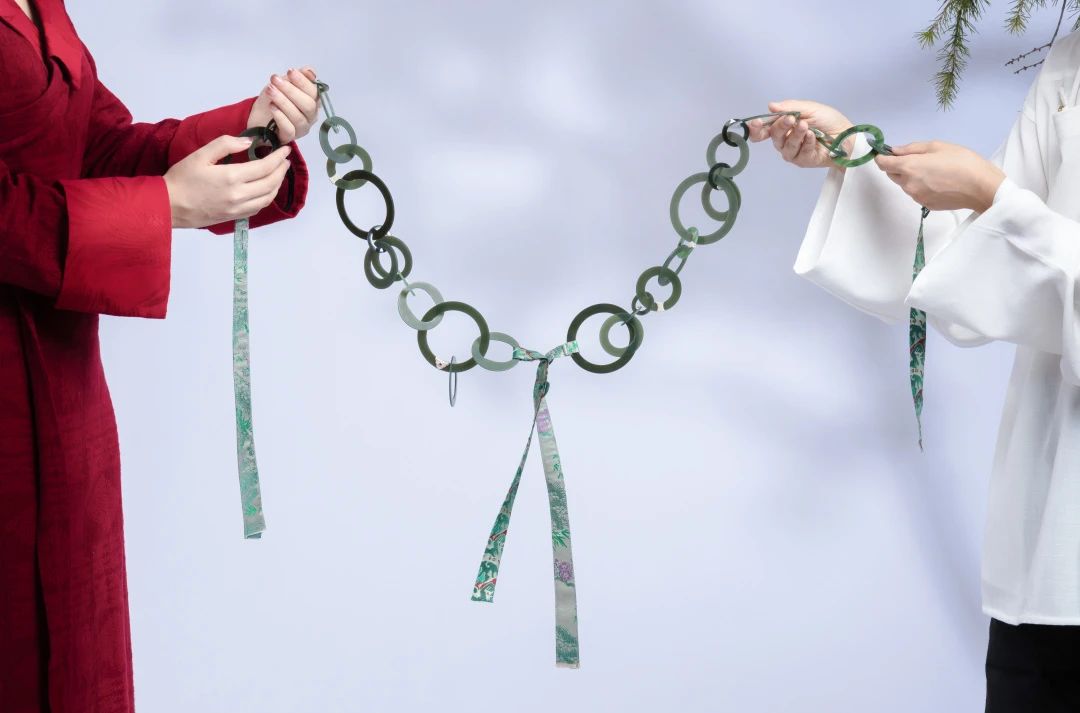
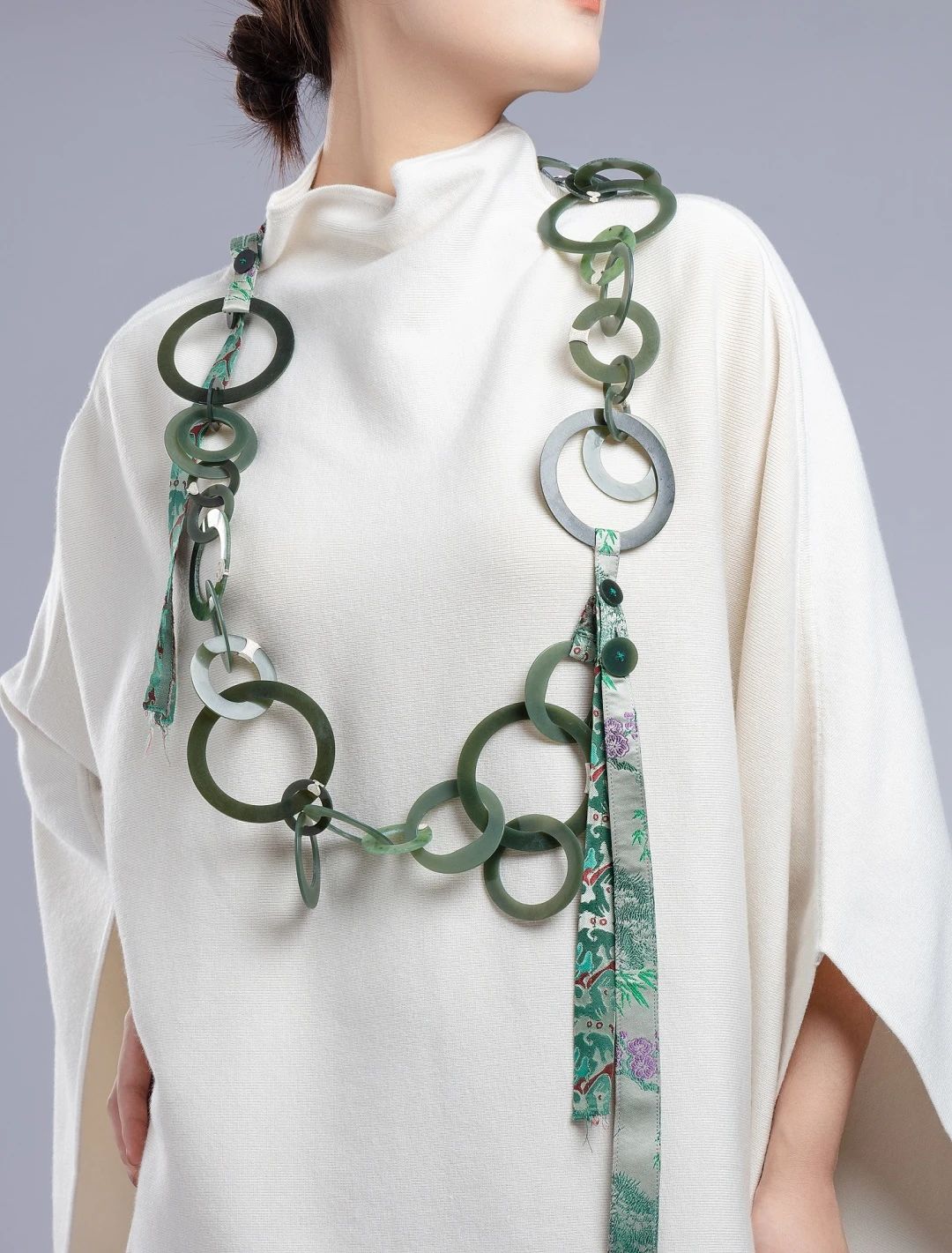
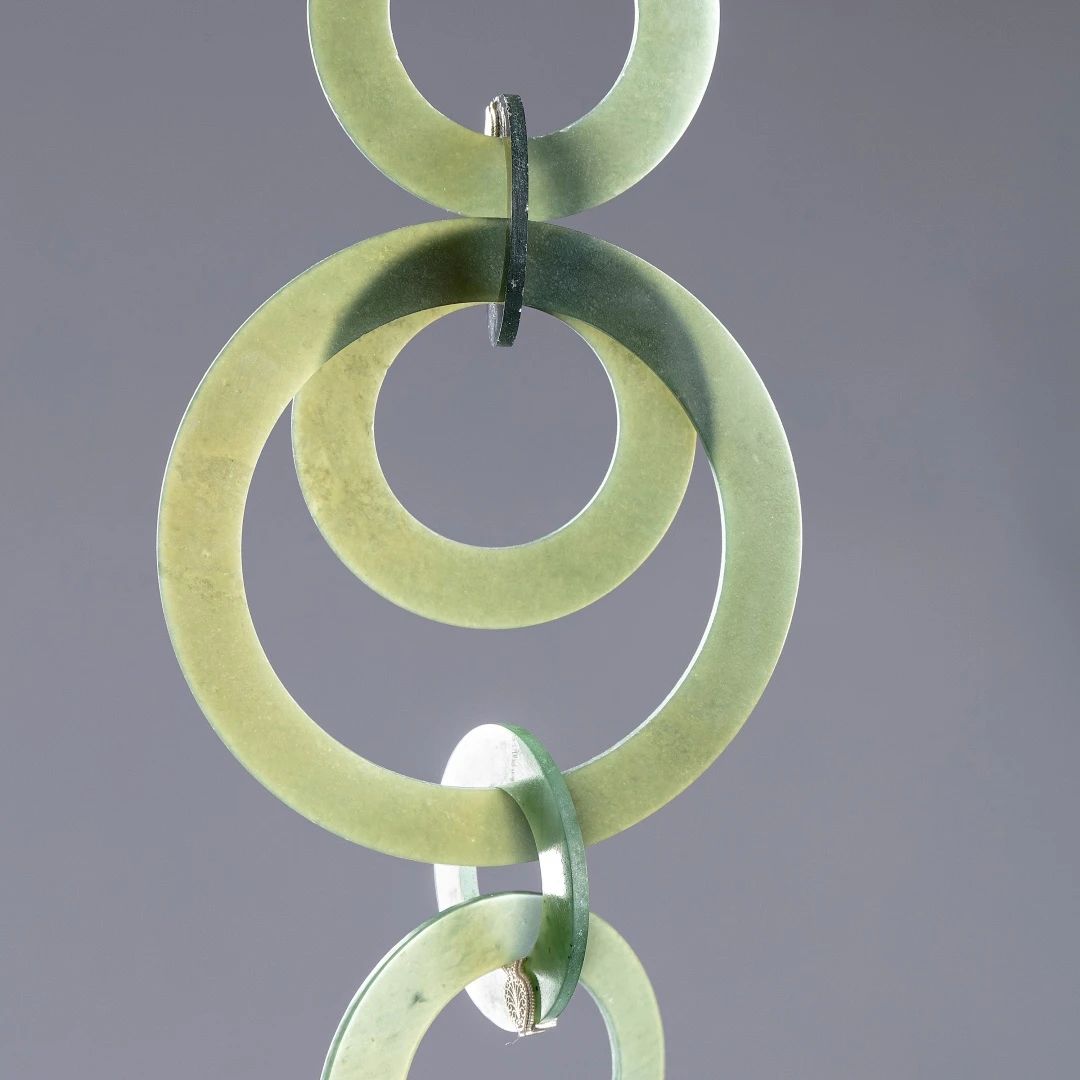
Materials: Qinghai Jasper, Silk, Silver
Time: 2024
Size: Maximum 130*28*7cm
Based on a review and analysis of traditional jade shapes, the work attempts to respond to the current aesthetic stereotypes and processing procedures of jade jewelry. From the perspective of sustainable development of material culture, it uses design strategies that mobilize the five senses to show the new look of jade jewelry in contemporary China.
In the Hetian jade craft industry, Qinghai Jasper is usually made into large wholesale vessels because it is not considered a very precious gemstone.
In order to make the container hollow, the material inside is always divided into several concentric cylinders, cut and taken out. Coincidentally, our ancestors used the most advanced drilling technology at the time to obtain the jade bi. Today, these cylinders are just by-products.
In the work "Evergreen", I cut these cylinders into jade pieces with a thickness of 2mm to respond to our jade wearing culture.
In order to make the container hollow, the material inside is always divided into several concentric cylinders, cut and taken out. Coincidentally, our ancestors used the most advanced drilling technology at the time to obtain the jade bi. Today, these cylinders are just by-products.
In the work "Evergreen", I cut these cylinders into jade pieces with a thickness of 2mm to respond to our jade wearing culture.
《New Century》
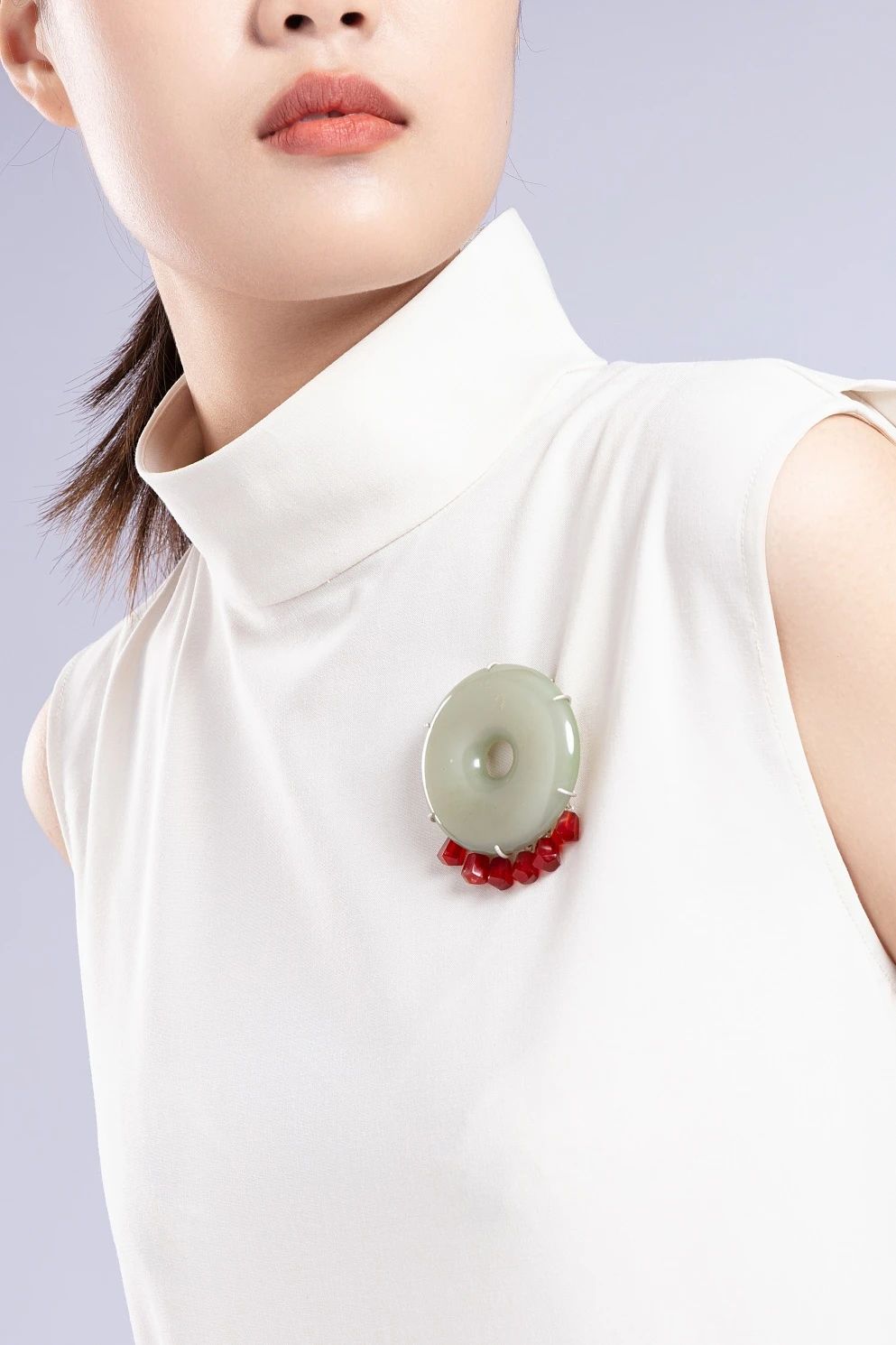
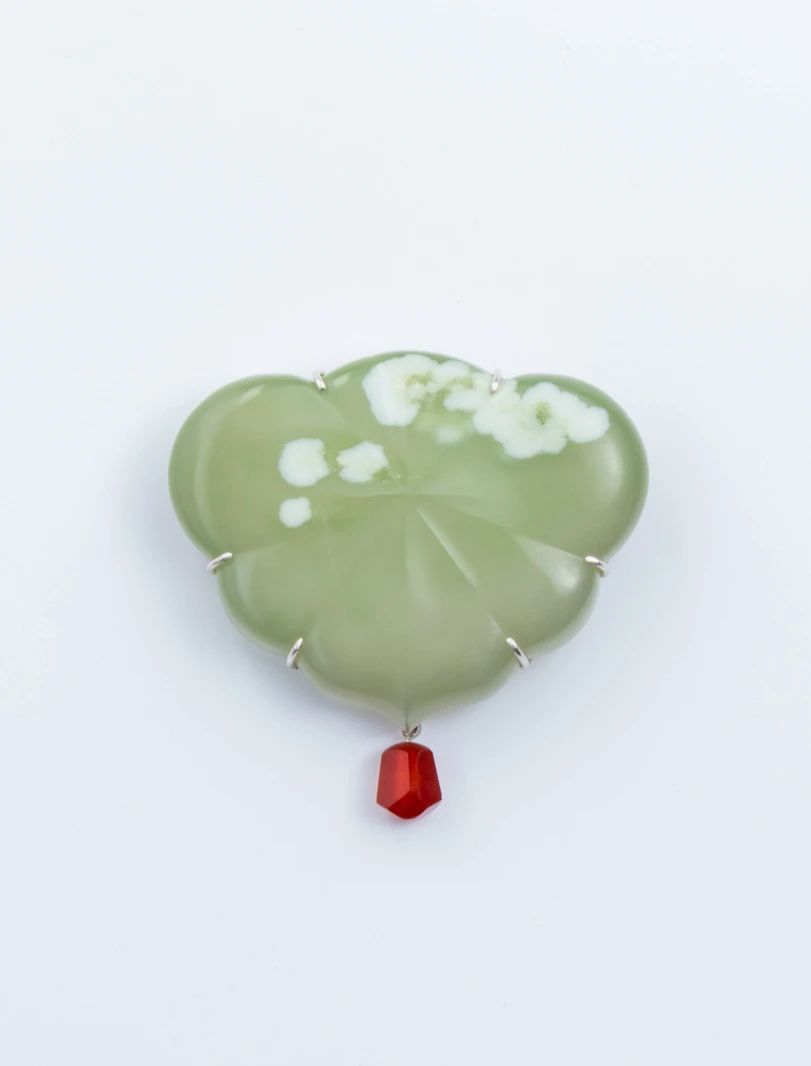
Materials: Hetian jade, agate, silver, steel wire
Time: 2024
Size: 6.5*4*1.7cm
The works are dominated by the green color of Qinghai jade and the vermilion color of agate, foreshadowing the vitality of Chinese jade culture in the new era.
《Valisi's Late Art Teaching Aids》
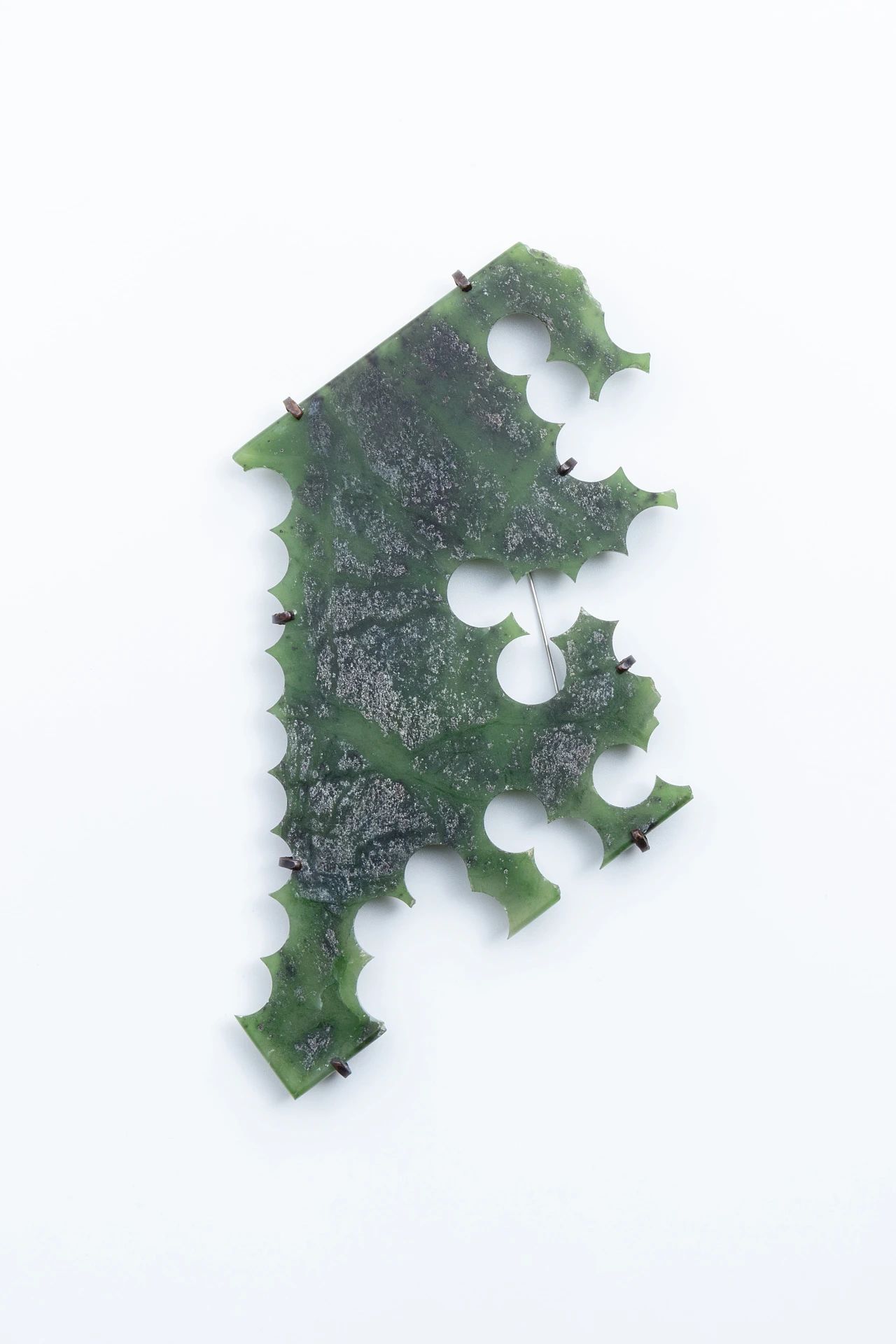
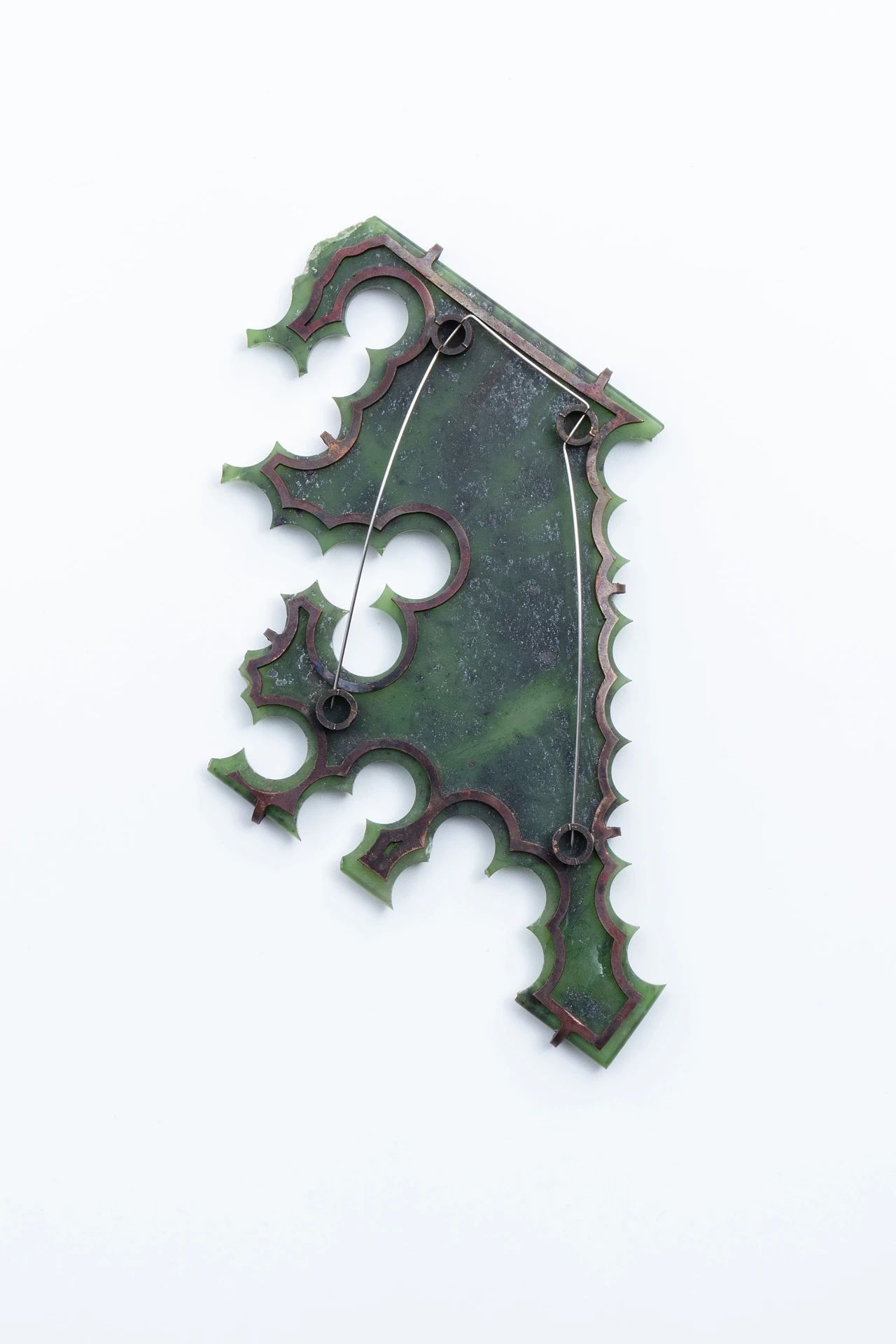
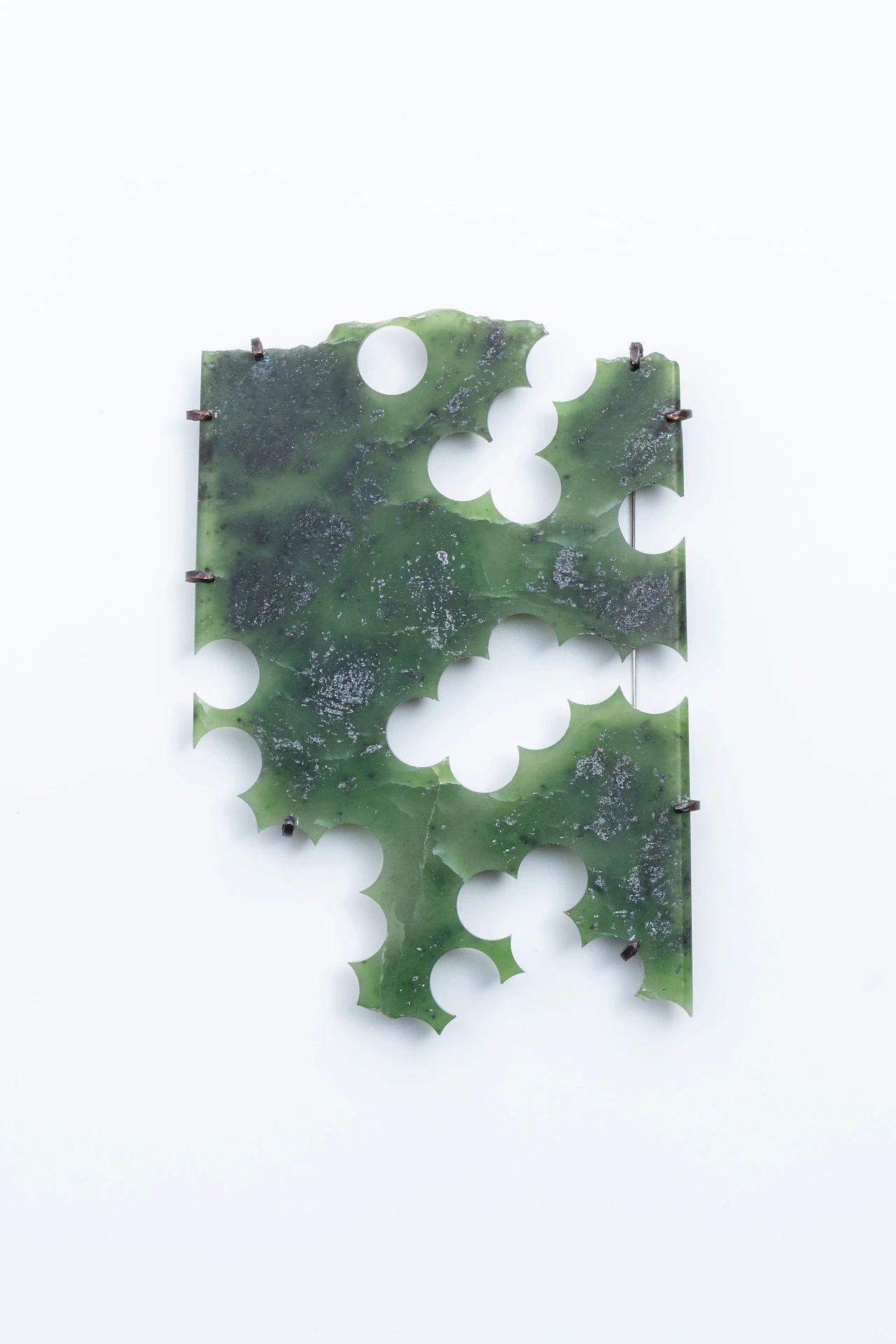
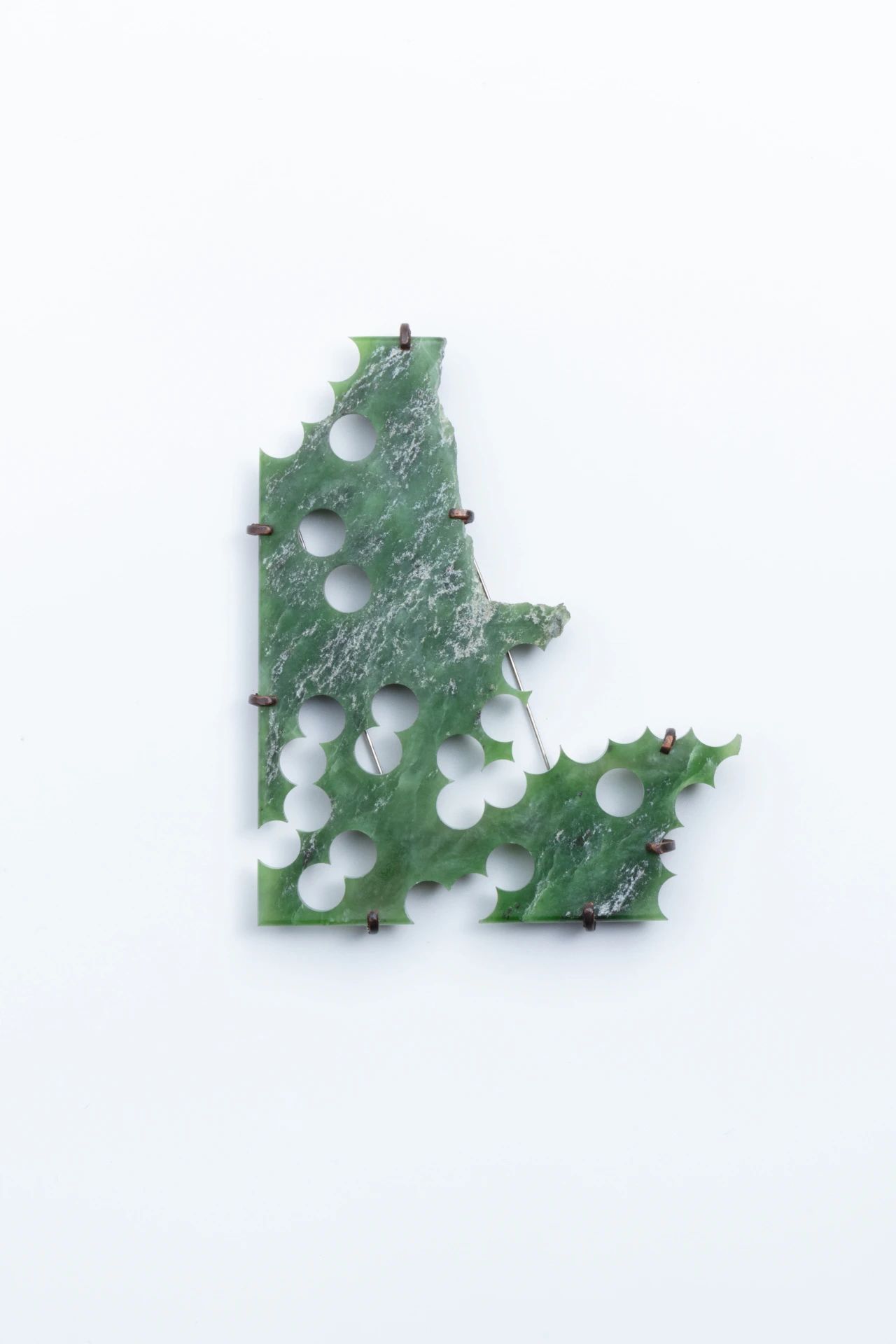
Materials: Hetian jade, copper, steel wire
Time: 2022
Size: Maximum 11*7*0.8cm
You found me in a jade workshop in Panyu, Guangzhou, but you don't know my origins or my history.
You want to find out where I came from, but you only know that I come from the Hetian jade mining area on the northern border of Pakistan. Although my value is not as noble as Xinjiang seed materials, we were originally hot magma, slowly cooling down over billions of years.
If there is still an ice age, maybe I will go with the flow and go anywhere. But over the years, I have been going in and out of the border under the name of "art teaching aids".
You want to find out where I came from, but you only know that I come from the Hetian jade mining area on the northern border of Pakistan. Although my value is not as noble as Xinjiang seed materials, we were originally hot magma, slowly cooling down over billions of years.
If there is still an ice age, maybe I will go with the flow and go anywhere. But over the years, I have been going in and out of the border under the name of "art teaching aids".
《Twenty-first Century Jade Pendant》
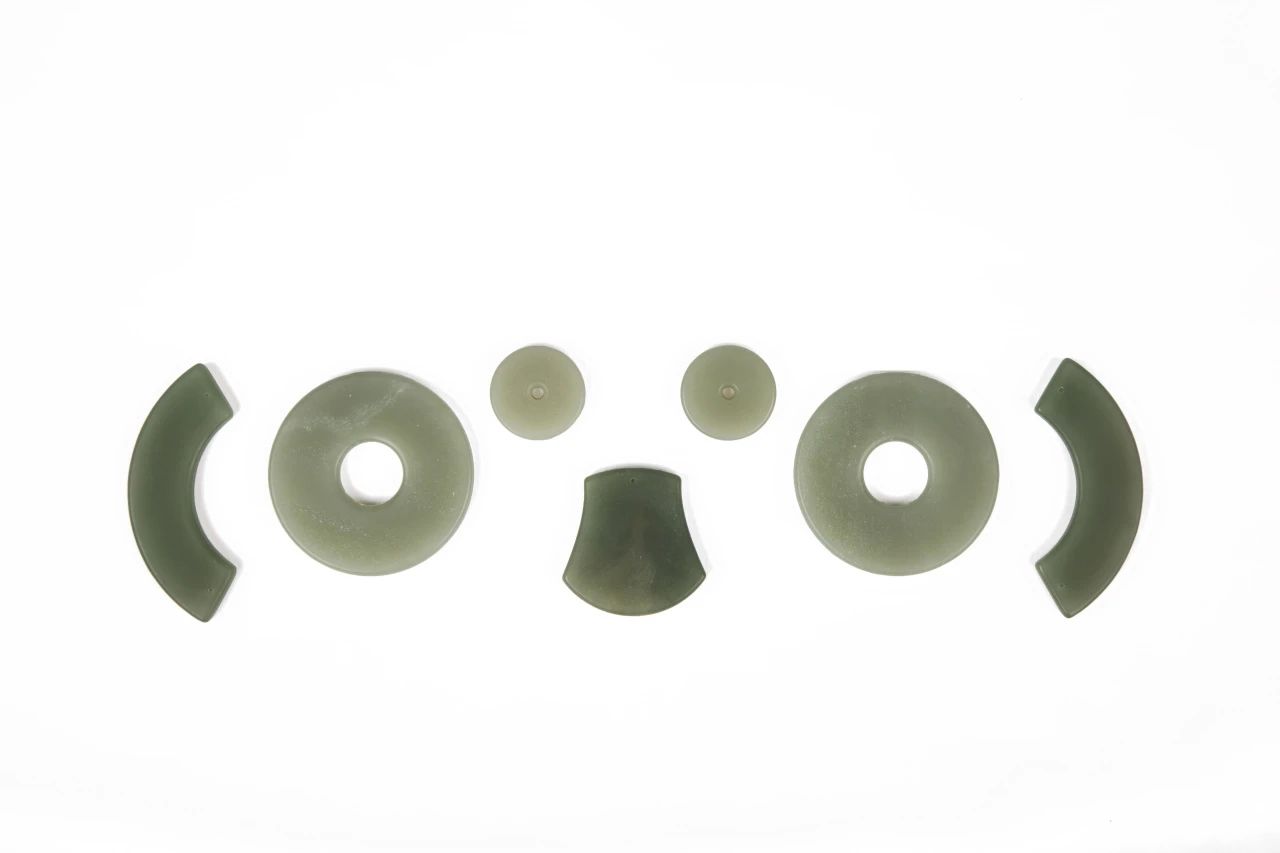
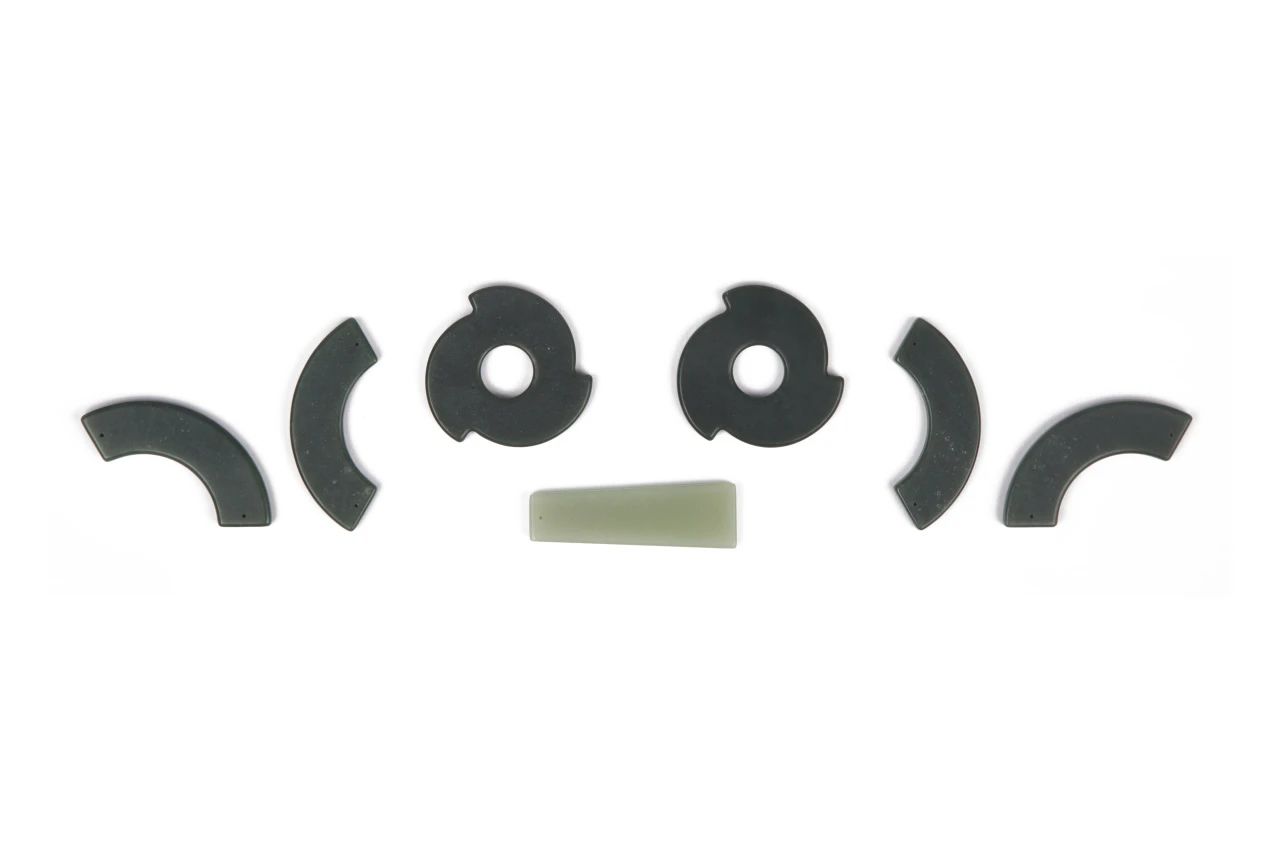
Material: Hetian jade
Time: 2018
Size: 31*17*0.8cm per set
Jade carving is an art of retreating to advance. In the entire carving process, the meaning can only be established by reducing the material.
It is this simple material and single working method that has created China's jade culture for thousands of years. The works of this project will reflect the spirit and quality of contemporary Chinese people from different levels.
In other words, the works use jade to represent people, and the appearance of jade is also the appearance of people.
It is this simple material and single working method that has created China's jade culture for thousands of years. The works of this project will reflect the spirit and quality of contemporary Chinese people from different levels.
In other words, the works use jade to represent people, and the appearance of jade is also the appearance of people.
This series of works uses common jade shapes such as jade rings, jade pendants, jade jue, jade zhang, jade gui, jade axes and jade xuanji to form a Chinese jade pendant set belonging to the 21st century.
Designer's personal experience
Q: What have you done to seek design inspiration? What stories have you told? What spiritual things do you hope your works can convey to people?
A: I have conducted field surveys in Suzhou, Zhenping and Jieyang to understand the trading of jade and the production of jade. These first-hand observations provide a different perspective for my work.
In fact, nephrite was originally hot magma, which slowly cooled down during the geological movement of the late Variscan period and formed the shape we see today.
Originally an ordinary mineral in nature, it has created the jade culture that has never been interrupted in Chinese civilization. However, the spirituality of jade has gradually been symbolized in the landscape of consumer culture.
Therefore, I try to go beyond the conventional production process in jade processing, discover new forms of beauty, and also try to explore the sustainability of material culture. I look for the possibility of creation in those discarded jade beads and scraps, and use the unfamiliar jewelry language to evoke the spirituality hidden in the jade.
Originally an ordinary mineral in nature, it has created the jade culture that has never been interrupted in Chinese civilization. However, the spirituality of jade has gradually been symbolized in the landscape of consumer culture.
Therefore, I try to go beyond the conventional production process in jade processing, discover new forms of beauty, and also try to explore the sustainability of material culture. I look for the possibility of creation in those discarded jade beads and scraps, and use the unfamiliar jewelry language to evoke the spirituality hidden in the jade.
Q: In your design career, how do you use Chinese culture to open up different design perspectives and creative methods?
A: Traditional Chinese creations are not only resources and themes that we often quote nowadays, but also provide us with perspectives and ideas that are different from Western contemporary art creation.
Influenced by rationalism, the creation of Western contemporary art is often concept-oriented, focusing on the rigor of logical expression in the deduction and interpretation of the work, and sometimes even over-defending. However, the Chinese way of creation emphasizes the empathy between people and objects.
I was able to bypass lengthy explanations and show the inner meaning of the work to the audience and wearers in a non-verbal or pre-verbal form, and gain their empathy and understanding.
I was able to bypass lengthy explanations and show the inner meaning of the work to the audience and wearers in a non-verbal or pre-verbal form, and gain their empathy and understanding.
Q: In an era of rapid development of AI, where will jewelry design go in the future?
A: Intelligent technology has brought an impact on all design fields. Regardless of the future of jewelry designers, jewelry design activities will continue.
Artificial intelligence technology provides us with a way to democratize design, giving more jewelry lovers the opportunity to participate in jewelry creation.
As professionals, we need to think about how to refine and express China's material culture through algorithms.
What we need to focus on is how to transform valuable Chinese jewelry design knowledge and concepts into data that can be understood by artificial intelligence systems and let the systems learn. This will enable the design wisdom and wearable culture we have accumulated in the "pre-AI era" to continue and play a role in the automated technology environment.
As professionals, we need to think about how to refine and express China's material culture through algorithms.
What we need to focus on is how to transform valuable Chinese jewelry design knowledge and concepts into data that can be understood by artificial intelligence systems and let the systems learn. This will enable the design wisdom and wearable culture we have accumulated in the "pre-AI era" to continue and play a role in the automated technology environment.