

Topaz | November Birthstone
The world's largest topaz finished product - Brazilian Princess
Topaz
The world's largest topaz finished product "Princess of Brazil"
Light yellow
Weighing 21,327ct
Grinded with 221 facets
Valued at approximately $1.07 million
Once included in the 1993 edition of "Guinness World's Largest Topaz"
"Topaz | Princess of Brazil"
PART 01
Topaz Physical properties of gemstones
_______________________________________________________✦

English name: Topaz
Mineralogical name: Topaz
Chemical composition: Aluminofluorosilicate (AI2[SiO4][F·OH]2), containing trace elements such as Li, Be, Ca, Se
Crystal system: Orthorhombic system
Crystal habit: Columnar crystal shape, common single forms include orthorhombic columns, orthorhombic bipyramids, parallel double faces, etc., among which orthorhombic columns are more developed, and there are often vertical lines on the columns. In addition, there are gravel-like outputs of various shapes
Cleavage: A set of complete bottom cleavage (due to the development of bottom cleavage, one end of the crystal is often cone-shaped and the other end is flat. During processing, the table surface needs to be oblique to the cleavage surface by more than 5°, otherwise the facets are not easy to polish)
Hardness: 8
Relative density: 3.50~3.60 (usually 3.53~3.56)
Refractive index: 1.61~1.64
Birefringence: 0.008~0.010Optical properties : Biaxial crystal positive light, often appears as pseudo-uniaxial crystal on the refractometer, because the difference between α and β values is only 0.001
Luster: Glass luster
Dispersion: 0.014 (low)
Inclusions: generally have initial cleavage, long tubular caves, flat and fine liquid inclusions and drop-shaped gas-liquid inclusions
Luminescence: Blue and colorless topaz emit weak yellow-green light in long-wave ultraviolet light, yellow-brown and pink topaz emit orange-yellow light, and the fluorescence is weak in short-wave ultraviolet light
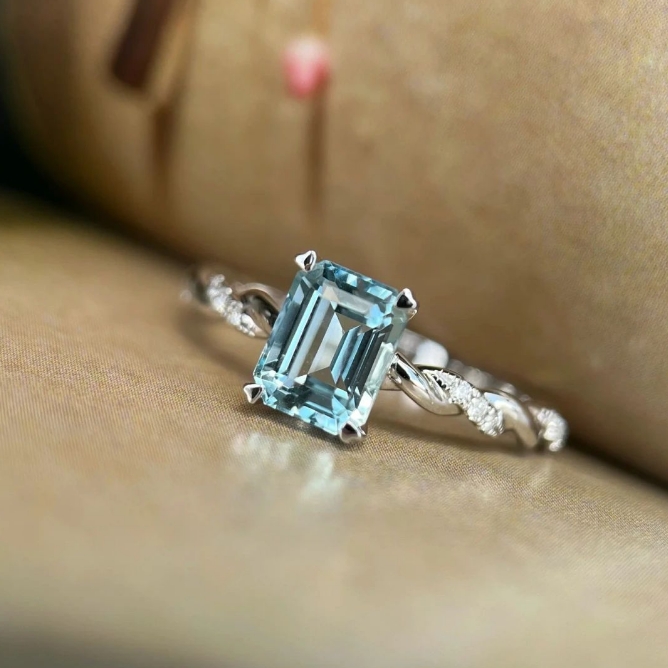
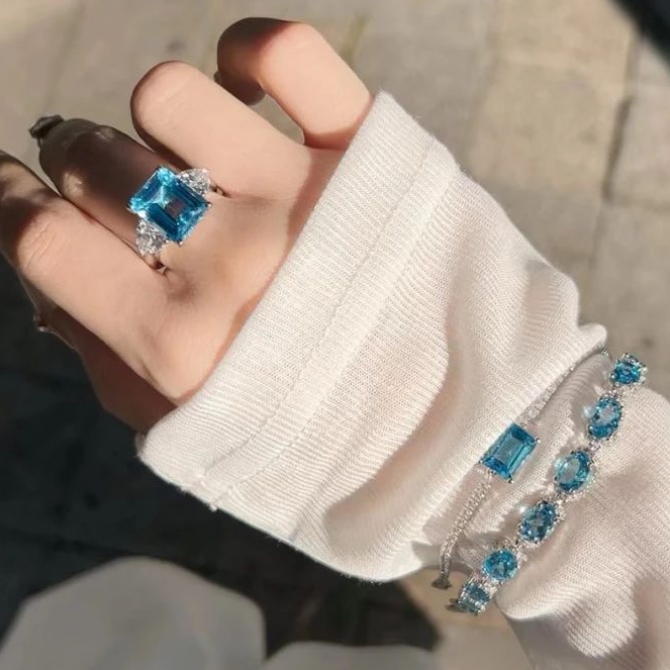
✦ Hardness ✦
Topaz has a Mohs hardness of 8, which makes it the fourth hardest gemstone after diamond, ruby, and sapphire. This high hardness gives topaz excellent wear resistance, allowing it to maintain its luster and shape well during daily wear and not easily scratched or worn. Therefore, topaz is very suitable for jewelry, especially jewelry such as rings and bracelets that often come into contact with hard objects.
✦ Durability ✦
Topaz is not only hard but also durable. It has good corrosion resistance to common chemicals such as alcohol and detergents, which means that topaz will not be easily corroded or damaged during daily cleaning and maintenance. In addition, topaz can withstand high temperatures and has strong heat resistance. It can remain stable at high temperatures above 900°C, which is beneficial for the processing and maintenance of gemstones.
PART 02
Topaz Origin and Gemstone Types
_______________________________________________________✦
✦ Topaz's main sources ✦
The main producing areas of topaz include Brazil, Pakistan, Namibia, Nigeria, Madagascar, Mexico, Myanmar, Sri Lanka and the United States. Minas Gerais, Brazil is one of the most important producing areas of high-quality topaz, and the raw stones produced are rich in color. China's topaz is mainly produced in Inner Mongolia, Jiangxi, Xinjiang and other places. Topaz is formed under high temperature and the action of volatile components. It is produced in granite pegmatite, crystal caves of acidic igneous rocks, greisen and high-temperature hydrothermal tungsten-tin quartz veins. It is produced as gravel in sedimentary layers.
✦ Types of Topaz (by color) ✦
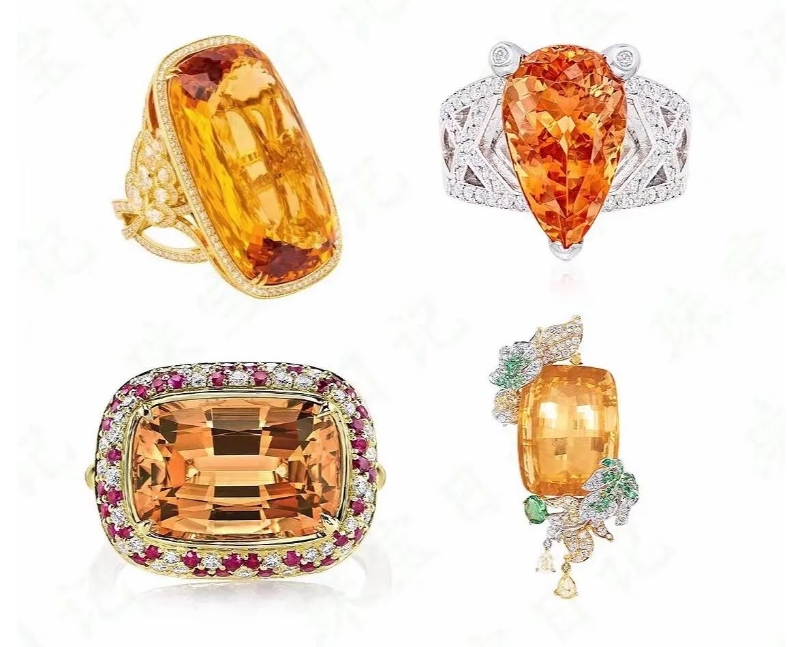
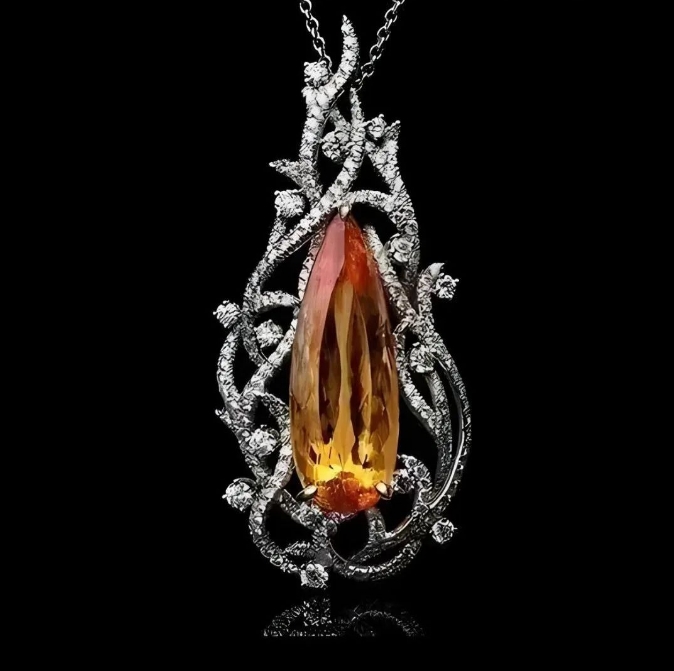
Imperial Topaz: Golden to orange-yellow, precious and rare.
Yellow Topaz: Bright yellow, gorgeous color.
Pink Topaz: Soft color, very popular among young people.
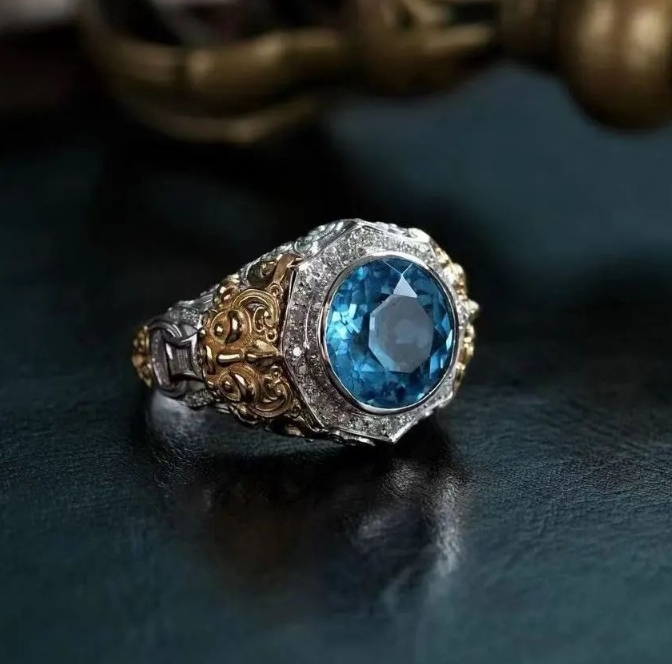
Blue Topaz: Various colors, from light to dark, low value.
Colorless Topaz: The most original color, often mistaken for diamond.
「Topaz」
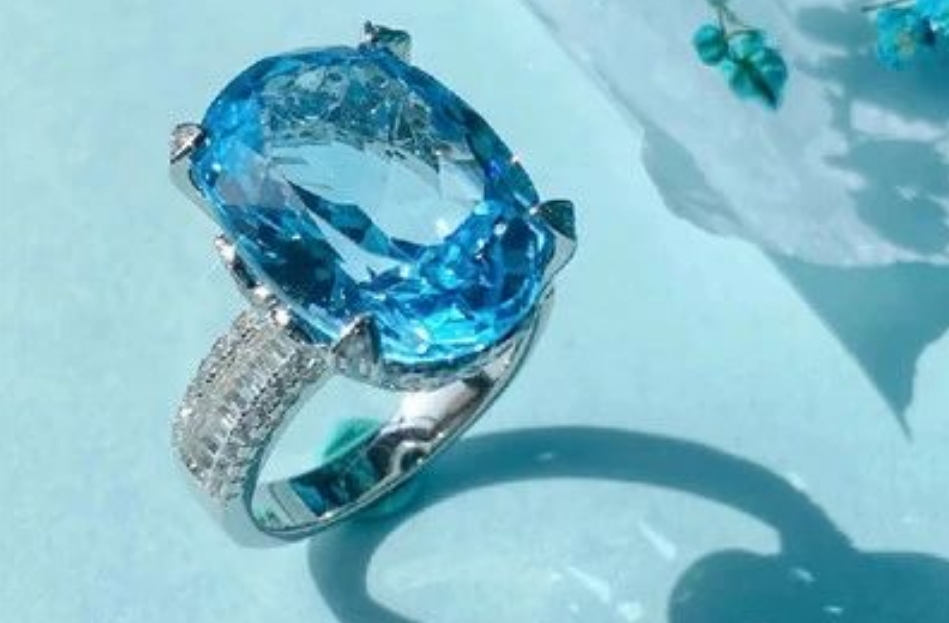
Many blue topazes on the market are colorless or light blue topazes that have been irradiated to turn blue.
PART 03
Topaz Gemstone Treatment and Maintenance
___________________________________________________________________✦
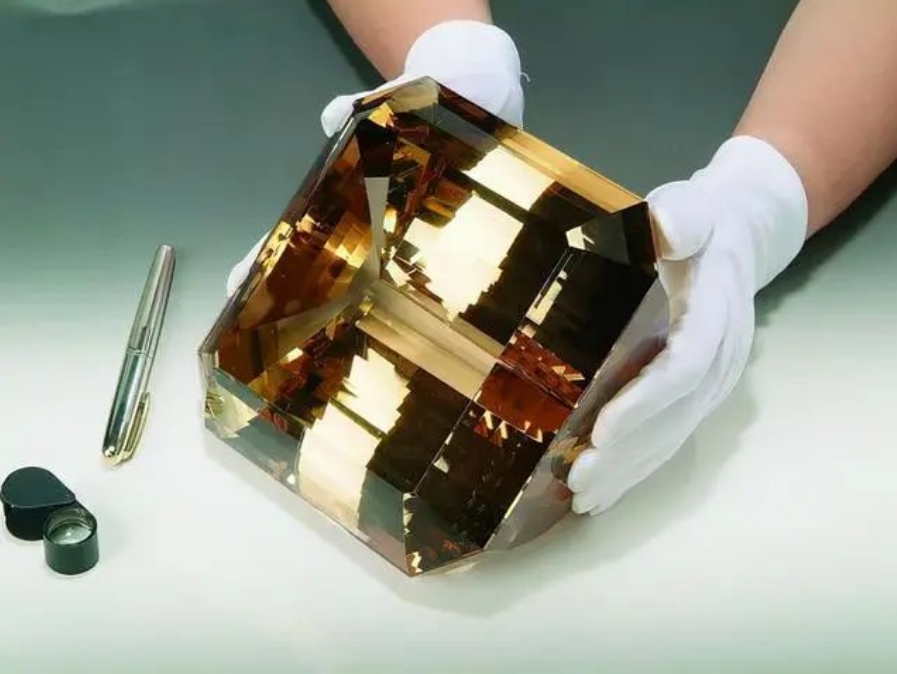
31,000 carats (about 6.2kg) El-Dorado topaz (Source: Internet)
✦ Topaz Treatment ✦
Most of the blue topaz on the market is obtained through radiation and heating. In addition, there is "electroplated topaz", whose iridescent effect is presented through artificial thin film coating. The main treatment methods of topaz are as follows:
1. Heat treatment: Yellow-toned topaz produced in Central Asia such as Brazil and Pakistan can become pink and red after heating.
2. Irradiation + heat treatment: Most blue topaz is produced by irradiating colorless topaz first and then heating it to remove the yellow and brown tones. This color change method is ideal, but there will be residual radioactivity. Manufacturers generally store it for more than one year before leaving the factory, so it is safe to wear the color-changed topaz. The color-changed blue topaz is very stable and can be considered a permanent change.
3. Coating treatment: Colorless topaz can become blue-green, multi-color (like a kaleidoscope), red, etc. after coating treatment. Some studies believe that this method is not durable enough and may wear out or partially peel off after a few years.
4. Diffusion treatment: Through the surface diffusion method, the colorless topaz can be changed into blue, blue-green, blue-purple, etc. The color is stable and more durable than coating treatment, which can almost be regarded as a permanent change.
✦ Topaz care ✦
Although topaz has excellent hardness and durability, you still need to pay attention to the following points when caring for it:
1. Avoid severe impact: Although topaz is hard, it is brittle and strong impact may cause it to crack.
2. Avoid extreme temperature changes: Although topaz is resistant to high temperatures, extreme temperature changes may cause thermal stress to it, causing internal cracks.
3. Avoid using steam or ultrasonic cleaners when cleaning to avoid damage. It is recommended to use mild soapy water and a soft cloth for cleaning.
In summary, the high hardness and durability of topaz make it an ideal gem material for use in various jewelry designs. As long as it is properly cared for, topaz can maintain its beauty and luster for a long time.
PART 04
History and meaning of Topaz gemstone
___________________________________________________________________✦
✦ History of Topaz ✦
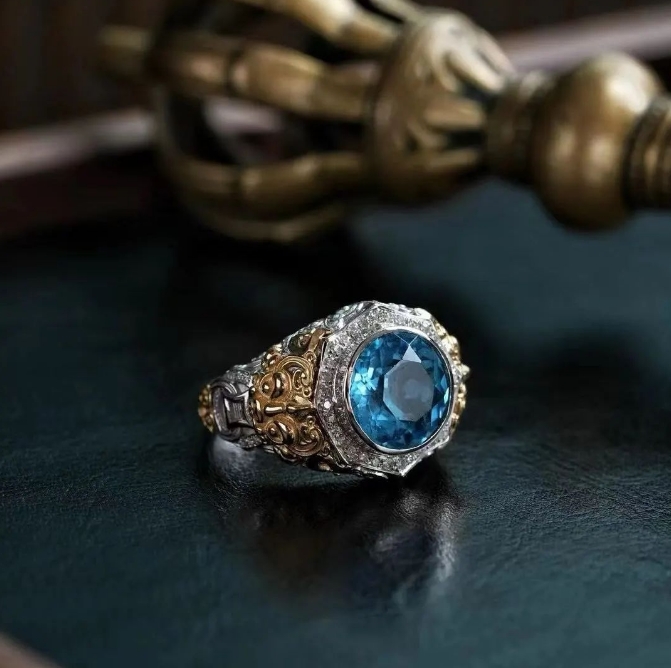
The history of topaz can be traced back to ancient Egypt. Legend has it that it was related to an Egyptian princess who was exiled to a small island that produced topaz and was revered by the islanders. In Europe, topaz was used in royal jewelry, especially in France and Spain in the 18th century, when the popularity of topaz reached its peak. Topaz is also known as the "stone of hope", symbolizing the sun god who gives life. You can be blessed by the sun.
✦ The meaning of topaz ✦
1.Sincere friendship Sincere friendship is one of the main meanings of topaz. Yellow topaz is considered the birthstone of November, expressing people's yearning for friendship and happiness.
2.Confidence and decisiveness Topaz also symbolizes confidence and decisiveness. Its soft and bright color can give the wearer confidence and courage. It also symbolizes wisdom.
3.Sincere love Topaz symbolizes true love and is also a commemorative gemstone for the 23rd wedding anniversary. When couples wear topaz, they can express their sincere and deep love for each other.
PART 05
The world's most precious topaz
___________________________________________________________________✦
In addition to the "Brazilian Princess" mentioned at the beginning
There are many precious topaz stones in the world↓
✦ El-Dorado Topaz ✦
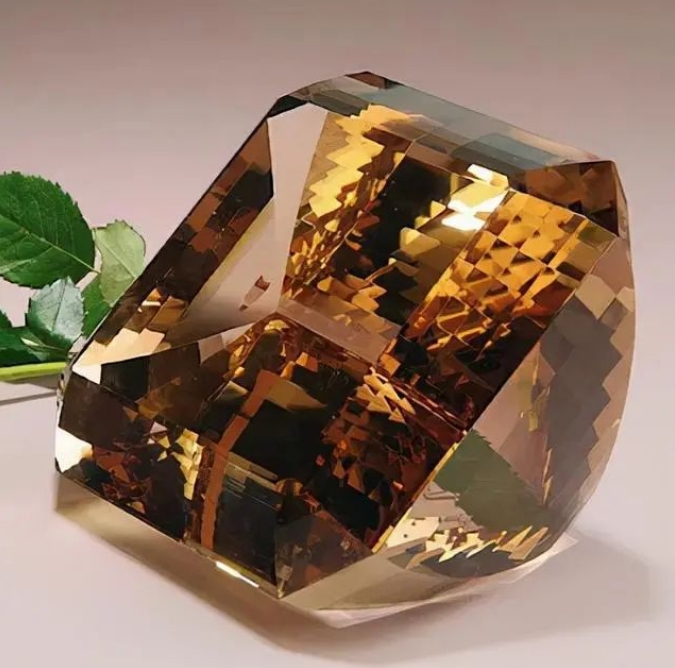
The 31,000-carat (6.2-kg) El-Dorado topaz is one of the largest faceted gemstones in the world. It was discovered in 1984 in a mine in Minas Gerais, Brazil, and is now part of the Programa Royal Collection in Spain. The original El-Dorado topaz weighs 81.57 pounds (37 kg). During the processing, it lost almost 80% of its weight in pursuit of a more perfect emerald cut, good clarity, and yellow-brown faceted product.
✦ 'Lua de Maraba' Topaz ✦
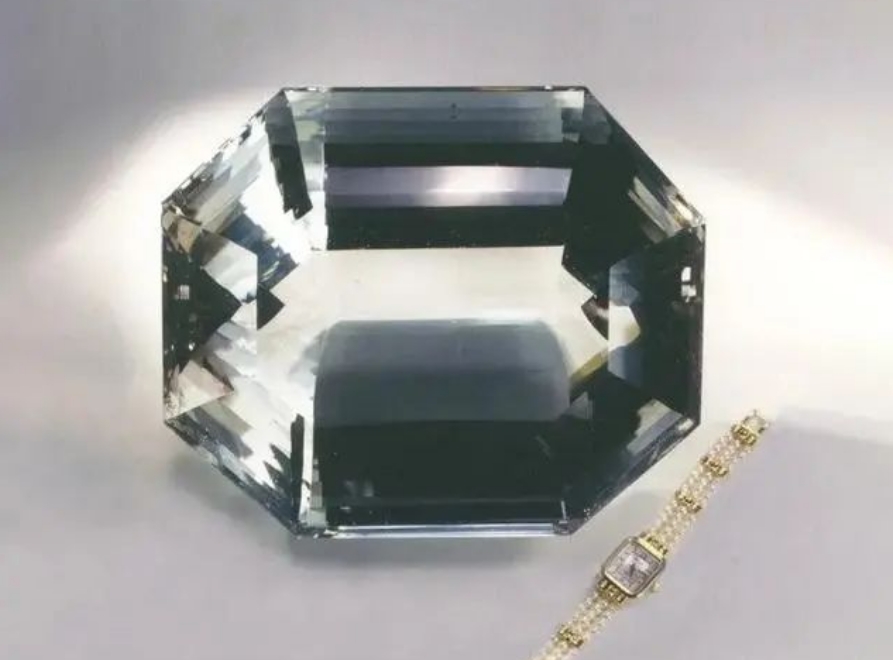
The "Lua de Maraba" topaz is the second largest polished topaz in the world, weighing 25,250 carats and measuring 18×15×10 cm. The name "Lua de Maraba" comes from Portuguese, meaning "The Moon of Maraba". The "Lua de Maraba" topaz is octagonal cut, and its good transparency and rare gray tone make it a unique faceted gemstone piece.
✦ American Golden Topaz ✦
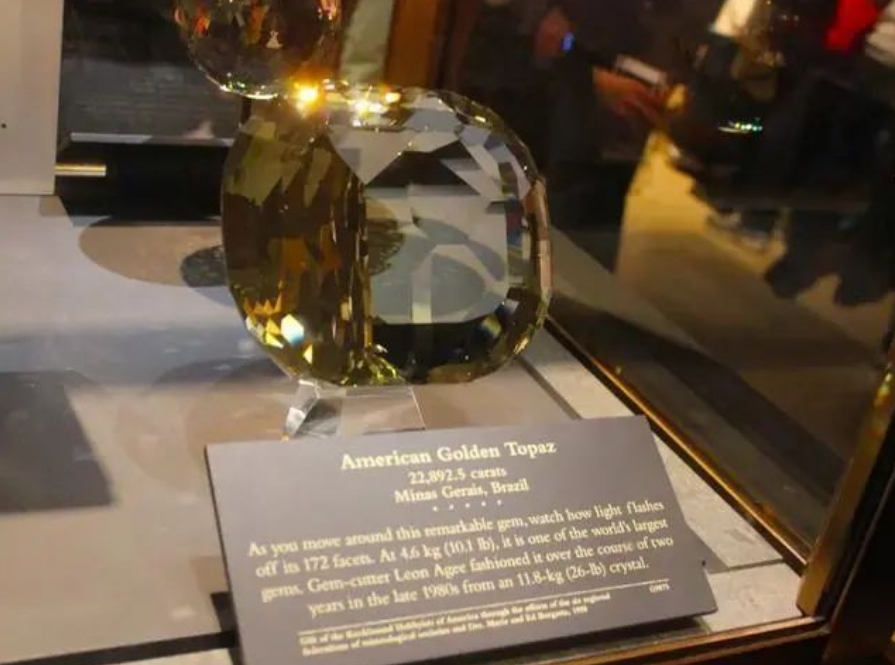
This topaz, called American Golden, weighs 22,892.5 carats and is the third largest faceted topaz in the world. Warm tones such as brown, orange and reddish brown can be seen on this topaz. It took Leon Agee two years to cut the American Golden topaz from a 26-pound (about 11.8kg) round rough stone found in Minas Gerais, Brazil. The final product has 172 facets and a bright honey-gold color.
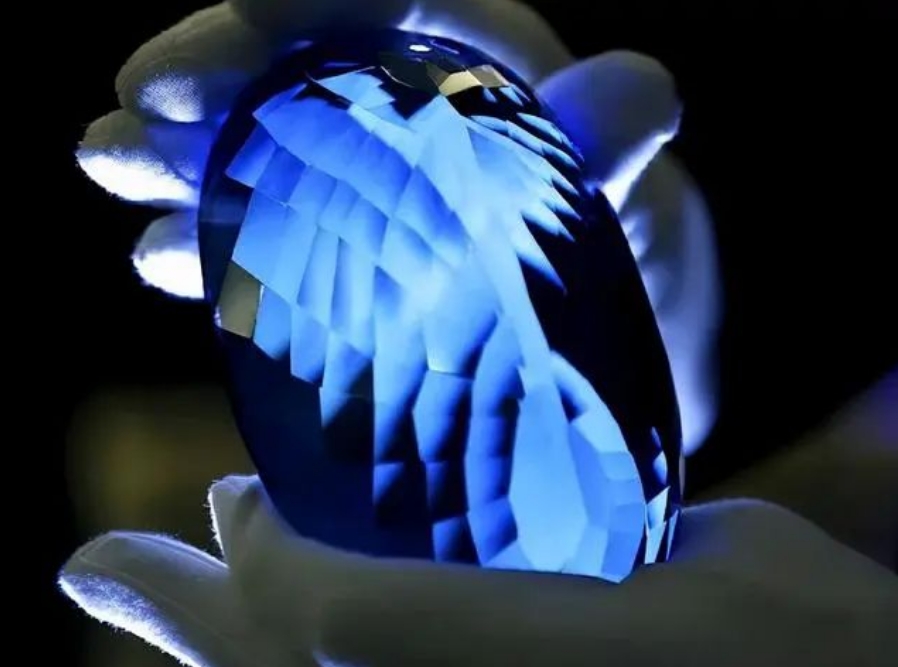
✦ Ostro Topaz ✦
This stunning blue topaz weighs 9,381 carats, about 2 kilograms, is nearly 6 inches long and 4.5 inches wide, and is oval-cut, about the size of a rugby ball. The amazing thing about this stone is not only its size, but also its rich electric blue color and excellent transparency. This stone was discovered deep in the Amazon rainforest in Brazil in 1986 by a British adventurer named Max Ostro, and the gem was named Ostro after him.
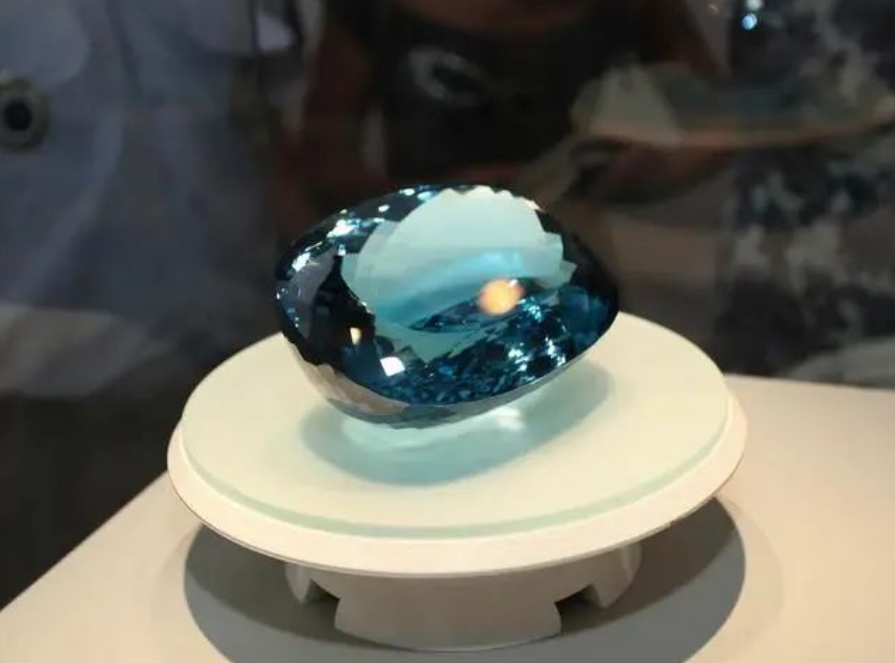
✦ Marbella Topaz ✦
This blue topaz is called "Marbella", weighs 8,225 carats (about 1.6kg) and measures 5.11x3.93x 2.75 inches. This gem is not only known for its size, but also for its carefully crafted oval cut, brilliant color and perfect transparency. It is now in the Smithsonian Museum in the United States. The "Marbella" topaz was originally called "Topaz Azul" (Spanish for blue topaz). It was renamed "Marbella" in 2010 because the deep blue color of this gem just matches the hue of the Mediterranean Sea near Marbella. Marbella is located on the southern coast of Spain, near the Strait of Gibraltar.
The main conclusions of the article are as follows:
(1) The topaz produced in the Guobaoshan area of Gansu Province is mainly colorless, light blue and dark blue. The crystals are well developed, and a considerable number of them are gem-grade. They are coexisting with minerals such as smoky quartz, feldspar, and muscovite to form rare classic mineral specimens in China. They have great scientific research and economic value and are worthy of further prospecting and exploration. The Guobaoshan area is expected to become the first important gem-grade topaz production area and classic mineral specimen production area in China.
(2) Electron probe analysis shows that the calculated molecular formula of natural blue topaz is consistent with the theoretical value, containing relatively high Cs and relatively less OH, which may be an important color-causing factor, but further work is still needed to confirm.